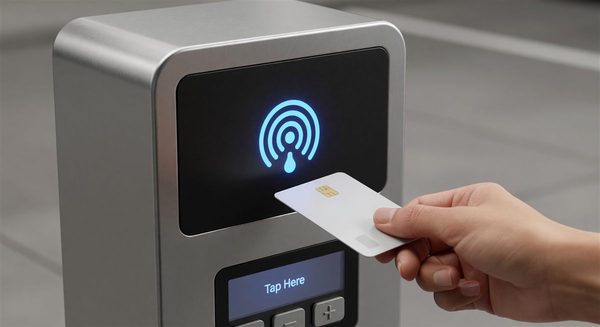
Every unattended payment environment eventually faces a network outage. Cellular signal drops, the DSL line to the garage office goes down, the acquirer gateway throws a 504. Retail merchants can fall back to a manual imprint or simply close the lane. Parking operators rarely have that option — lanes need to keep moving, patrons need to exit, and revenue needs to be captured. That is why offline authorization matters more in parking than in most industries.
How Offline Authorization Works
EMV was designed from the outset to permit offline authorization for low-risk transactions. The EMVCo specifications define a set of risk-management parameters — offline data authentication methods, terminal floor limits, random transaction selection, and velocity checking — that let the chip and the terminal decide whether to approve a transaction without contacting the issuer.
For a parking pay station, an offline-approved transaction is stored on the terminal and forwarded to the acquirer once connectivity is restored. This pattern is called store-and-forward and is what most operators mean when they say “offline mode.”
What the Terminal Must Do Offline
- Run offline data authentication (SDA, DDA, or CDA) to confirm the chip is genuine.
- Check the amount against the terminal floor limit.
- Run velocity checking (consecutive offline transaction count) against chip limits.
- Record the full authorization data for later transmission.
- Decline if any risk parameter fails.
The terminal cannot check whether the card is reported stolen, whether the account has sufficient funds, or whether the card is in a negative database — because none of that is known without an online call.
The Risk Operators Assume
Every offline-approved transaction is a financial decision. If the card is stolen, the account is closed, or the balance is insufficient, the issuer will decline the capture when the transaction eventually flows through — and the operator eats the loss as a chargeback or a forced-post decline. This is not a theoretical risk; it is the reason most U.S. acquirers configure a zero floor limit and push as many transactions online as possible.
Parking operators who enable store-and-forward are accepting a defined fraud exposure in exchange for operational continuity. The trade-off is usually worth it for short outages and low-ticket transactions; it is a bad trade for long outages or high-dollar monthly parking.
Implementation Patterns
Fully online with outage bypass
The terminal stays online whenever it can. During an outage it either declines all card transactions, or raises a gate based on ticket or license plate data without processing payment. Revenue is recovered later through billing or the never-exit-without-paying gate logic. This pattern has zero fraud risk but can create customer service incidents at gates.
Store-and-forward with limits
The terminal approves offline transactions up to a defined ceiling (often USD 50 to USD 100) with consecutive-offline-transaction caps. Above the limit, or after N consecutive offline approvals, the terminal goes to decline-only. This is the most common parking pattern.
Tokenized quick-service
For pay-on-entry environments with known regular users, the terminal authenticates the card at first use, tokenizes, and uses the token for subsequent offline sessions. Risk is limited to the token-holder base, not the open card world.
Reconciliation Challenges
Offline transactions settle late — sometimes hours or days after the transaction date. That creates reconciliation complications:
- Daily batch totals will not match processor reports on the day of the outage.
- Decline rates on store-and-forward items can spike days after the outage, creating delayed losses.
- Chargebacks tied to offline transactions may reference a transaction date that predates the processor record.
Clean reconciliation requires the pay station to log the offline transaction with its original terminal date-time and the processor-settlement date-time as two separate fields.
Regulatory Context
PCI DSS v4.0 does not prohibit offline authorization, but it does require that stored card data in a store-and-forward queue be encrypted to the same standard as online data. The IPMI and other industry associations have published operator guidance recommending that store-and-forward capability be implemented with explicit risk acceptance, documented limits, and monitored reconciliation reporting.
FAQ
Is offline authorization the same as an offline PIN?
No. Offline PIN is a CVM option where the chip verifies the PIN without an online call to the issuer. Offline authorization is the entire transaction being approved without an online call. A transaction can be offline-authorized and still use offline PIN, or use no CVM at all.
Will my acquirer let me run offline transactions?
It depends on your merchant agreement. Many U.S. acquirers configure terminals for zero-floor online-only operation by default and must enable store-and-forward explicitly, typically with a signed risk-acceptance addendum.
Does offline mode work with contactless taps?
Yes — EMV contactless kernels support offline authorization the same way contact chips do, subject to the same risk parameters.
What happens to an offline transaction if the card is later declined?
The operator absorbs the loss. Once the transaction has been completed offline, the gate has opened and the patron has left. Recovery through chargeback representment is rarely successful for force-post-equivalent offline items.