The smartphone in a driver’s pocket has become a legitimate alternative to the card reader on a pay station. Mobile parking payments — transactions initiated, authorized, and completed through a phone rather than a physical card or cash — have grown from a niche convenience into a significant revenue channel for parking operators. In some urban markets, mobile transactions now account for 20% to 40% of all parking payments.
But “mobile payment” is a broad term that covers several distinct technologies. A driver tapping an iPhone on a contactless reader is making a mobile payment. So is a driver scanning a QR code with a parking app or starting a session from a phone a block away. These methods rely on different hardware, different software integrations, and different business models. Understanding the differences helps operators invest in the right technology mix.
The Four Mobile Payment Methods in Parking
1. NFC Tap-to-Pay (Mobile Wallets)
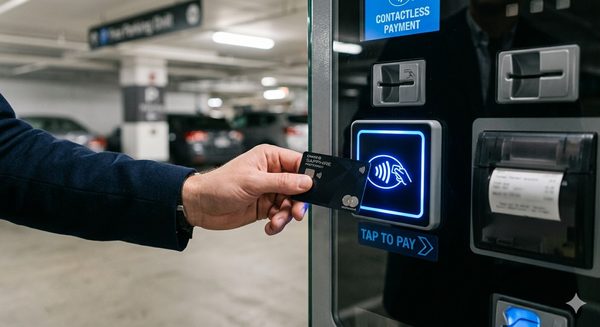
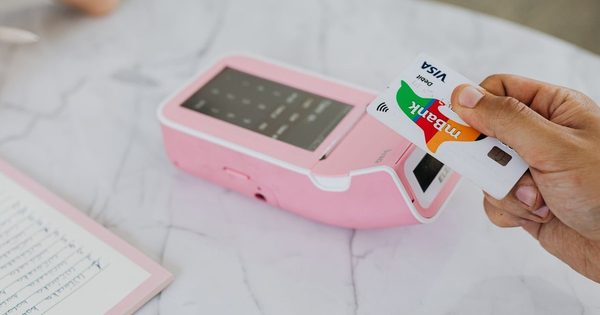
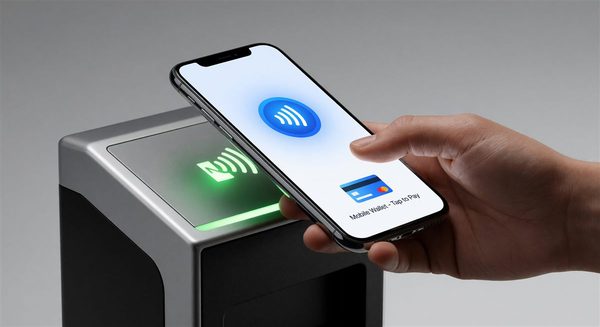
Near Field Communication (NFC) tap-to-pay uses the same contactless EMV infrastructure as physical tap cards. Apple Pay, Google Pay, and Samsung Pay store tokenized card credentials on the phone and transmit them wirelessly when the device is held near an NFC-capable payment terminal.
How it works at a pay station:
- The pay station calculates the parking fee
- The driver holds their phone (or smartwatch) near the contactless reader
- The phone authenticates via Face ID, fingerprint, or PIN
- The tokenized card data transmits to the reader
- The transaction processes through the standard card network rails
- The station issues a receipt and opens the gate
Key characteristics:
- Requires an NFC-capable contactless reader on the pay station
- No parking-specific app needed — uses the phone’s built-in wallet
- Transaction processes identically to a contactless card tap
- The operator’s payment processor handles it like any card transaction
- Fastest mobile method: one to three seconds at the terminal
NFC tap-to-pay is covered in detail in our guide on EMV and contactless payments in parking.
2. Parking Apps (Session-Based)
Dedicated parking apps — ParkMobile, PayByPhone, Passport (now part of Flowbird), SpotHero, and dozens of regional alternatives — let drivers start and stop parking sessions from their phone without visiting a pay station at all.
How it works:
- The driver opens the app and enters a zone number (posted on signage) or selects the lot/garage from a map
- The app starts a session, recording the start time and location
- When the driver is ready to leave, they end the session in the app (or the app expires the session at the maximum time)
- The app charges the driver’s stored payment method
- For gated facilities, the system validates the payment and signals the gate to open (via LPR match, QR code scan, or API integration)
Key characteristics:
- Driver does not interact with any physical hardware
- Requires the driver to download and set up the app before parking
- Operator pays a convenience fee per transaction (typically $0.25-$0.45) or a percentage
- Works for on-street meters, surface lots, and some garages
- Real-time session data feeds into the operator’s management dashboard
3. QR Code Payments
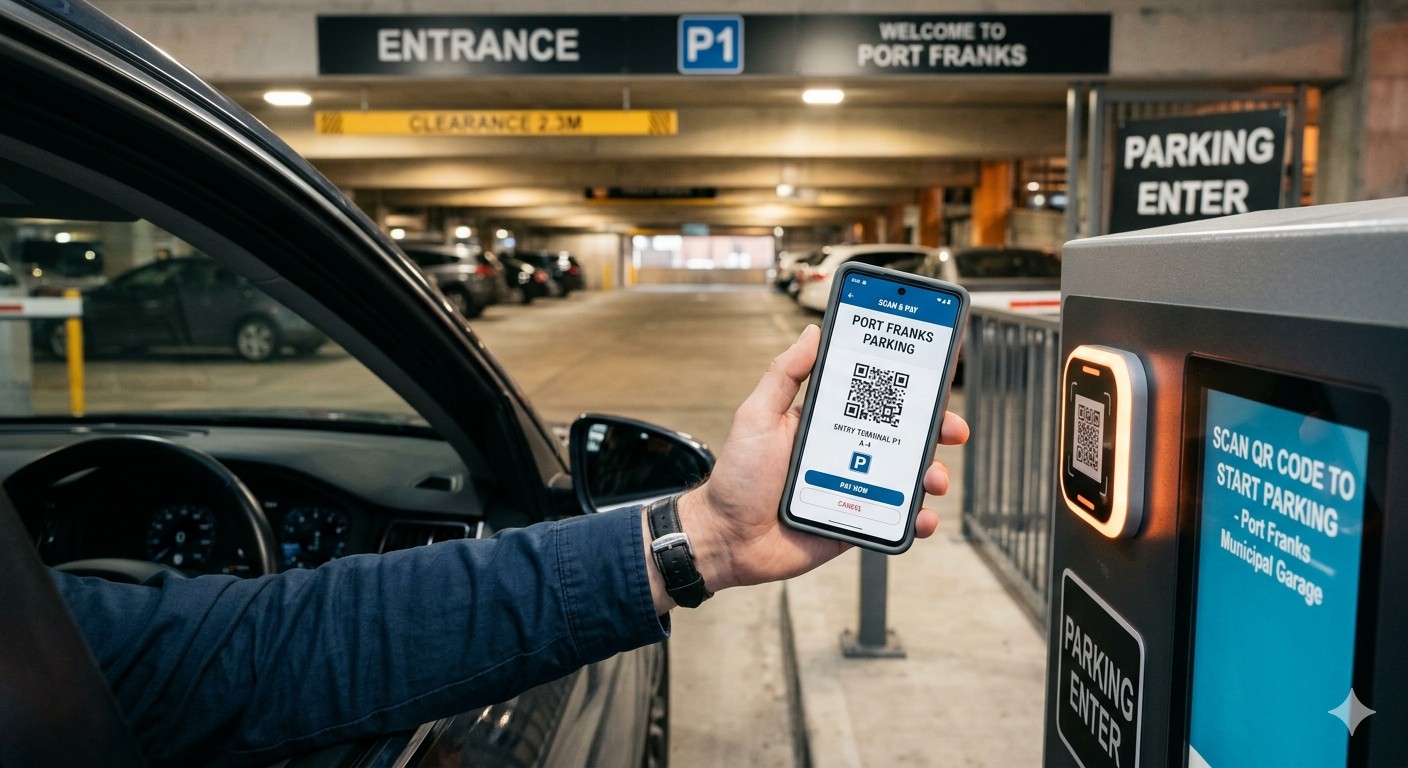
QR codes bridge the gap between app-based and terminal-based payments. A QR code displayed on a pay station, on signage, or printed on a ticket links the driver’s phone to a web-based payment flow — no app download required.
How it works:
- The driver scans a QR code with their phone’s camera
- A mobile-optimized web page opens showing the parking fee and payment options
- The driver enters card details or uses a stored mobile wallet
- The payment processes and a confirmation displays on the phone
- The pay station receives confirmation and opens the gate or marks the session as paid
Key characteristics:
- No app installation required — huge advantage for infrequent parkers
- Works with any smartphone that has a camera
- The QR code can be static (printed on signage) or dynamic (generated per transaction on a pay station screen)
- Payment processing can route through the operator’s existing processor or a third-party platform
- Fallback option when card readers are offline
4. In-App Payment via Aggregators
Navigation and ride-hailing apps — Google Maps, Apple Maps, Waze, and Uber — have begun integrating parking payments. A driver searching for parking in Google Maps might see a “Pay for Parking” option that routes through ParkMobile or another integrated provider.
How it works:
- Driver searches for parking in a navigation or ride-hailing app
- The app shows available lots/garages with pricing
- Driver selects a location and initiates payment within the app
- The aggregator routes the transaction through a parking payment provider
- The parking operator receives payment minus the aggregator’s and provider’s fees
Key characteristics:
- Maximum discoverability — reaches drivers before they arrive at the facility
- Operator has limited control over the user experience
- Revenue share involves multiple intermediaries
- Still emerging — availability varies significantly by market
Comparison Table
| Feature | NFC Tap-to-Pay | Parking App | QR Code | In-App Aggregator |
|---|---|---|---|---|
| App download required | No | Yes | No | Uses existing app |
| Hardware at terminal | NFC reader | None required | Camera or screen | None required |
| Transaction speed | 1-3 seconds | 30-60 seconds | 15-30 seconds | 60+ seconds |
| Works offline (driver side) | Yes (stored tokens) | Needs data | Needs data | Needs data |
| Per-transaction cost to operator | Card processing fee only | $0.25-$0.45 + % | Varies by platform | Aggregator fee + provider fee |
| Driver friction | Very low | Medium (setup) | Low | Low |
| Works in gated facilities | Yes (via pay station) | With integration | With integration | Limited |
| Data captured | Card token only | User profile, session data | Email or card only | Limited |
Integration Considerations for Operators
Gated Facilities
The central challenge with mobile payments in gated facilities is matching the mobile transaction to the physical vehicle at the exit gate. Three approaches work:
- License plate recognition (LPR) — The mobile app captures the plate number during session start. At exit, an LPR camera reads the plate and validates payment. This is the most seamless approach.
- QR code validation — The driver receives a QR code on their phone after payment and scans it at an exit reader. Requires a QR scanner at the exit lane.
- Ticket validation — The driver’s ticket barcode is linked to the mobile transaction. The ticket is still inserted at exit, but the system recognizes it as paid.
Each approach has tradeoffs in cost, reliability, and user experience. LPR is the gold standard but requires camera hardware at every lane. QR code validation is inexpensive but adds a step for the driver. Ticket validation works with legacy equipment but does not deliver the “ticketless” experience.
On-Street and Surface Lots
On-street installations and ungated surface lots are the easiest environments for mobile payments because there is no gate to open. The driver simply pays via app or QR code, and enforcement officers verify payment by checking the app’s backend, scanning a license plate against active sessions, or looking up zone/space numbers.
Most municipalities that have deployed mobile parking payments use a multi-vendor approach — allowing two or more parking apps to operate in the same zones. This gives drivers choice but adds complexity to the operator’s reconciliation process.
Revenue Management and Reconciliation
Mobile payments create a separate revenue stream from terminal-collected payments. Operators need to reconcile:
- App-based payments — settled by the app provider, typically net 30 days minus convenience fees
- QR code payments — may settle through the operator’s own processor or a third-party platform
- NFC tap-to-pay — settles through the existing card processing relationship, same as contactless card taps
- Aggregator payments — settled by the aggregator platform, with the most complex fee structures
A unified reporting dashboard that pulls data from all payment channels is essential. Most modern parking management platforms from companies like T2 Systems, Skidata, Flowbird, Hectronic, and Scheidt & Bachmann offer integrations with major parking app providers and can consolidate revenue reporting across channels.
Security Considerations
Each mobile payment method carries its own security profile.
NFC Tap-to-Pay
The most secure mobile method for parking. Transactions use EMV tokenization — the actual card number never reaches the pay station. Each transaction generates a unique cryptogram. The risk surface is minimal.
Parking Apps
Security depends on the app provider’s implementation. Reputable providers like ParkMobile, PayByPhone, and Passport use industry-standard encryption and PCI-compliant payment processing. However, the driver’s stored account credentials become a target — the 2021 ParkMobile data breach exposed 21 million user records, though payment card data was not compromised due to tokenization.
QR Codes
QR codes introduce a phishing vector. A bad actor could place a fraudulent QR code sticker over the legitimate one, redirecting the driver to a fake payment page. Mitigation strategies include:
- Using dynamic QR codes generated per transaction rather than static printed codes
- Incorporating the facility name and transaction details in the landing page URL
- Educating drivers to verify the URL before entering payment information
- Implementing tamper-evident QR code overlays
In-App Aggregators
Security is managed by the aggregator platform (Google, Apple, Uber). The operator has little visibility into or control over the security implementation but benefits from the massive security investment these platforms make.
Cost Analysis for Operators
Mobile payments are not free to the operator. Each method carries costs beyond standard card processing fees.
| Cost Component | NFC Tap | Parking App | QR Code | Aggregator |
|---|---|---|---|---|
| Hardware | NFC reader ($500-$1,500 retrofit) | None | QR scanner ($200-$500) or none | None |
| Per-transaction fee | 2.5%-3.5% card processing | $0.25-$0.45 flat + 2-4% | 2.5%-4% (varies) | 3-8% total |
| Monthly platform fee | None | $0-$500/month | $0-$200/month | None typically |
| Integration cost | Minimal if reader exists | $2,000-$15,000 one-time | $1,000-$5,000 one-time | $5,000-$25,000 one-time |
| Settlement timeline | T+1 to T+3 | Net 15-30 days | T+1 to T+7 | Net 30+ days |
The International Parking & Mobility Institute publishes benchmarking data that helps operators compare mobile payment costs and adoption rates against industry averages.
For operators weighing the broader decision between cloud-based and on-premise payment infrastructure, our guide on cloud vs. on-premise parking payment systems provides useful context.
Adoption Trends and What Is Coming Next
Mobile parking payment adoption continues to accelerate, driven by several forces:
- Consumer expectation — Drivers under 40 overwhelmingly prefer mobile-first payment experiences
- Operator efficiency — Every transaction that moves to mobile is a transaction that does not require cash handling, receipt paper, or card reader maintenance
- Enforcement technology — LPR-based enforcement makes app payment validation seamless, eliminating the need to display a paper receipt on the dashboard
- Reduced hardware dependency — Mobile payments provide revenue continuity when pay stations are offline for maintenance
Emerging trends to watch include:
- Super-app integration — Parking payments embedded in banking apps, transit apps, and EV charging apps
- Vehicle-to-infrastructure (V2I) payment — Cars with built-in payment capability (Mercedes, BMW, and others are piloting this) that pay for parking automatically
- Biometric authentication — Palm and facial recognition replacing cards and phones entirely
- Open-loop transit integration — Using the same contactless card or phone tap for parking and public transit in a single mobility account
The National Parking Association tracks these trends through annual technology surveys and publishes adoption benchmarks that help operators plan their investment roadmaps.
Key Takeaways
- Mobile parking payments encompass four distinct technologies — NFC tap-to-pay, parking apps, QR codes, and in-app aggregators — each with different hardware requirements, costs, and user experiences.
- NFC tap-to-pay is the fastest and most secure mobile method but requires a contactless reader at the pay station. It works through the existing card processing infrastructure.
- Parking apps offer the richest data and highest convenience for frequent parkers but require app download and account setup, creating friction for one-time visitors.
- QR codes are the best low-friction option for infrequent parkers — no app required. Watch for phishing risks with static QR codes.
- Operators should support multiple mobile channels rather than betting on a single platform. The parking payment landscape is fragmenting, and driver preferences vary by market and demographic.
- Reconciliation across channels is the hidden complexity. Invest in a management platform that consolidates mobile, card, and cash revenue into a single dashboard.