The parking industry’s transition to EMV chip and contactless payment technology has moved from optional upgrade to operational necessity. Magnetic stripe cards — the dominant payment method at parking terminals for three decades — are being phased out by card networks. Visa stopped issuing new mag-stripe-only cards in many markets. Mastercard has announced a timeline to eliminate magnetic stripes entirely. For parking operators still running mag-stripe-only equipment, the liability shift that began in 2015 means they bear the cost of counterfeit card fraud at their terminals.
This article explains what EMV and contactless payments mean for parking operations, what hardware changes are required, and how operators can make the transition without disrupting revenue.
What Is EMV?
EMV stands for Europay, Mastercard, and Visa — the three organizations that originally developed the chip card standard. Today the standard is maintained by EMVCo, a consortium owned by the six major card networks (American Express, Discover, JCB, Mastercard, UnionPay, and Visa).
An EMV transaction uses a microprocessor chip embedded in the payment card to generate a unique, encrypted authorization code for each transaction. Unlike a magnetic stripe — which transmits the same static card data every time — the chip makes card cloning effectively impossible. This is why counterfeit fraud dropped dramatically at chip-enabled terminals in every market that adopted EMV.
EMV Transaction Types
| Type | Method | Security Level | Speed |
|---|---|---|---|
| Chip and PIN | Card inserted, PIN entered | Highest — two-factor authentication | 8-15 seconds |
| Chip and signature | Card inserted, signature on screen | High — chip protects against counterfeiting | 8-15 seconds |
| Contactless (NFC) | Card or phone tapped near reader | High — chip + transaction limit controls | 1-3 seconds |
| Magnetic stripe (fallback) | Card swiped through reader | Low — static data, easily cloned | 3-5 seconds |
In unattended parking environments, chip-and-PIN is less common because many U.S.-issued cards are chip-and-signature. The practical result is that most parking pay stations use “chip and choice” — accepting chip insertion with either PIN or no cardholder verification method (CVM), depending on the card issuer’s configuration.
The Liability Shift: Why This Matters Financially
In October 2015, the major card networks shifted fraud liability for counterfeit card transactions. Before the shift, card issuers absorbed most counterfeit losses. After the shift, whichever party in the transaction — issuer or merchant — has the less secure technology bears the cost.
For parking operators, this means:
- If your terminal accepts EMV chip and a counterfeit chip card somehow generates a fraudulent transaction, the card issuer absorbs the loss.
- If your terminal only accepts magnetic stripe and a counterfeit card is used, your business absorbs the loss.
The liability shift for unattended terminals (including parking pay stations, fuel pumps, and vending machines) followed a different timeline than in-store retail. After multiple deadline extensions, the automated fuel dispenser deadline settled at April 2021 for Visa and Mastercard. Parking terminals have generally been expected to comply on similar timelines, though enforcement and chargeback practices vary.
The financial exposure is real. The PCI Security Standards Council reports that card-present counterfeit fraud remains a significant category, and terminals that have not migrated to EMV are disproportionately targeted.
Contactless Payments: Tap to Pay
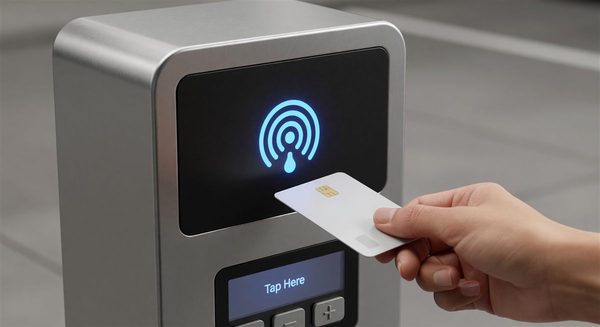
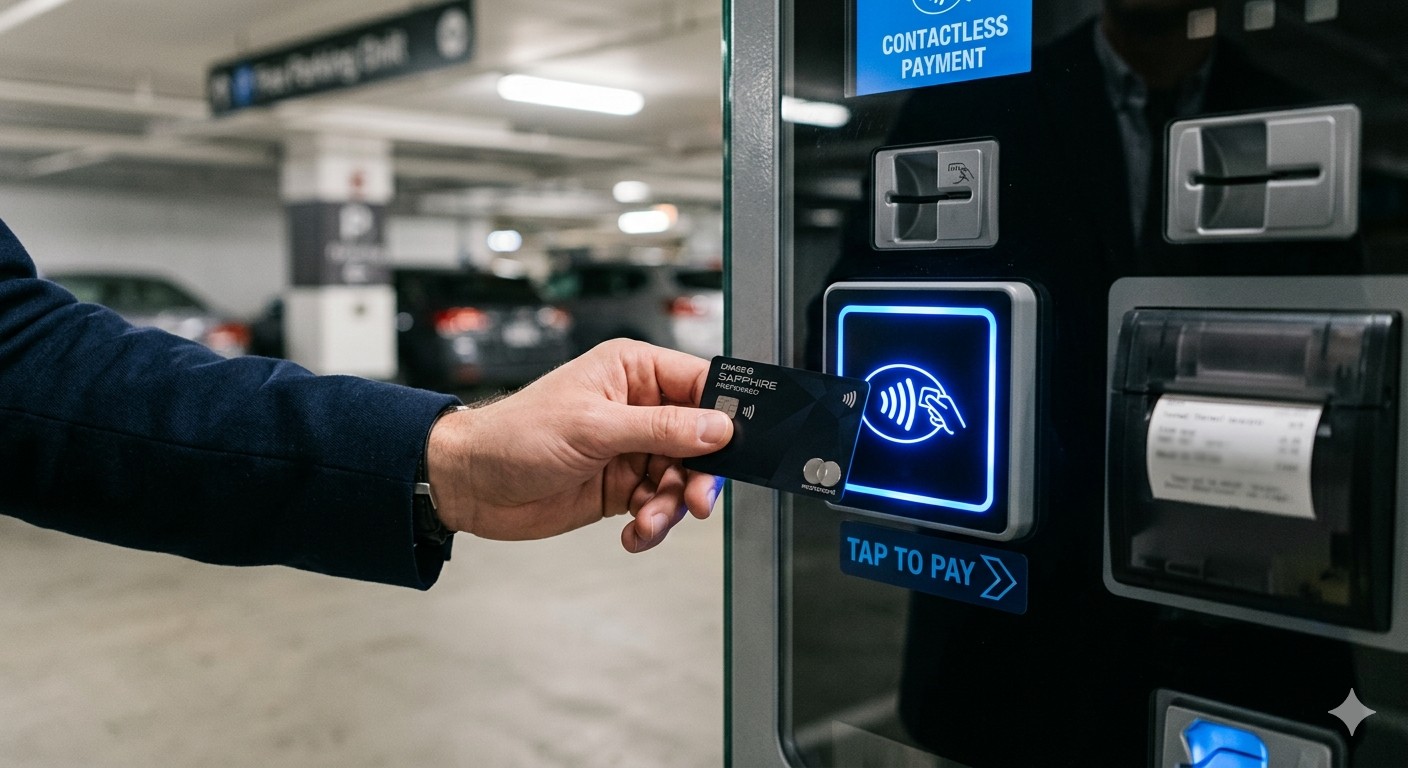
Contactless payment — also called tap to pay or NFC payment — uses the same EMV chip technology but communicates wirelessly via Near Field Communication (NFC) radio at 13.56 MHz. The card or mobile device must be within approximately 4 cm (1.5 inches) of the reader.
What Counts as Contactless
- Contactless cards — Physical credit and debit cards with an embedded NFC antenna (identified by the wave symbol on the card)
- Mobile wallets — Apple Pay, Google Pay, Samsung Pay, and other device-based wallets that tokenize card credentials
- Wearables — Smartwatches and fitness bands with payment capability (Apple Watch, Garmin Pay, Fitbit Pay)
All of these use the same contactless EMV kernel at the terminal. From the pay station’s perspective, a tap from a physical card and a tap from an iPhone look identical to the payment processing flow.
Why Contactless Matters for Parking
Contactless transactions complete in one to three seconds — significantly faster than chip insertion, which typically takes eight to fifteen seconds including card removal. In a lane-based parking environment where vehicles queue behind each other, those seconds matter. Faster transactions mean shorter queues, less idling, and fewer drivers abandoning the lane.
Consumer adoption has also reached a tipping point. According to industry data, contactless transactions now represent over 50% of in-person card payments in many urban markets. Drivers increasingly expect tap-to-pay at parking terminals, and the absence of it creates friction — especially for the growing number of consumers who no longer carry a physical wallet and pay exclusively with their phone.
Hardware Requirements for EMV and Contactless
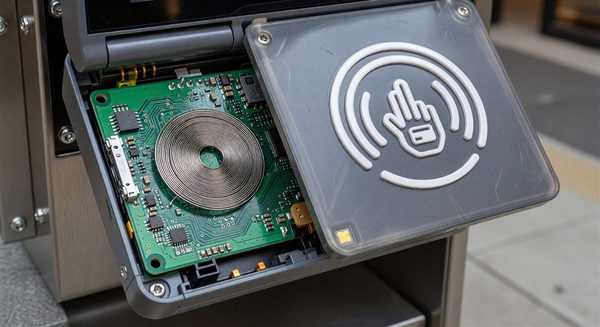
Upgrading a parking pay station to accept EMV and contactless requires changes to the card reader module and potentially the payment application software.
Card Reader Specifications
| Feature | Requirement |
|---|---|
| EMV chip | Contact slot meeting EMVCo Level 1 and Level 2 type approval |
| Contactless | ISO 14443 A/B and ISO 18092 NFC protocols |
| Magnetic stripe | Still needed for fallback — some cards and markets still use mag stripe |
| PCI PTS | Device must be listed on the PCI SSC list of approved PTS devices |
| Encryption | Point-to-point encryption (P2PE) or end-to-end encryption (E2EE) recommended |
| Display | Cardholder-facing display for transaction amount and prompts |
Most pay station manufacturers — Flowbird, Hectronic, Scheidt & Bachmann, Skidata, IPS Group, and T2 Systems — now ship EMV and contactless readers as standard equipment. The reader module is typically a separate, swappable component that mounts in the pay station’s card reader bay.
Retrofit vs. Replacement
For existing pay stations, the decision between retrofitting a new card reader module and replacing the entire station depends on several factors:
| Factor | Retrofit | Full Replacement |
|---|---|---|
| Cost | $1,500 - $4,000 per station | $10,000 - $35,000 per station |
| Downtime | 2-4 hours | 1-2 days (including civil work if mounting changes) |
| Software update | Required — new payment application kernel | Included with new equipment |
| Certification | Reader must be certified with your specific station model | Factory-certified as a complete system |
| Future-proofing | Limited by existing platform capabilities | New platform supports next-generation features |
| When it makes sense | Station is less than 5 years old and platform supports EMV | Station is older than 7-8 years or lacks processing power for modern payment stacks |
If your current stations are from a major manufacturer and less than five years old, a reader swap is usually straightforward. The manufacturer’s field service team can handle it, and the payment application update can often be pushed remotely. For older equipment — particularly stations with outdated processors or discontinued operating systems — a full replacement is typically more cost-effective than trying to graft modern payment technology onto a legacy platform.
The Certification Process
Getting EMV working at a parking terminal is not as simple as plugging in a new reader. The transaction flow must be certified end-to-end.
Key Certifications
- EMVCo Level 1 — Hardware certification that the chip reader’s electrical interface meets EMV specifications
- EMVCo Level 2 — Software certification that the payment application kernel correctly processes EMV transactions
- Card network brand certification — Each card network (Visa, Mastercard, Amex, Discover) independently certifies that transactions on their network process correctly through the terminal
- Payment processor certification — The payment processor (Worldpay, Fiserv, Chase, Elavon, etc.) certifies the terminal against their host systems
This multi-layer certification process typically takes three to twelve months from initiation to production deployment. Operators do not handle certification themselves — the pay station manufacturer and payment processor manage it — but the timeline affects project planning. Start the conversation with your manufacturer well before your target go-live date.
Mobile Wallet and QR Code Integration
Beyond chip and contactless, parking operators are adding alternative digital payment paths. Mobile wallet payments via NFC (Apple Pay, Google Pay) are handled automatically by any contactless-capable reader — no additional integration required.
QR code payments are a different integration path. In this model, the pay station displays a QR code that the driver scans with a parking app or general payment app. The transaction is processed through the app rather than through the station’s card reader. This approach has gained traction in markets where mobile payment apps are dominant, and it provides a fallback path when card readers are out of service.
For a broader look at mobile payment technologies in parking, see our guide on mobile parking payments.
Implementation Timeline and Planning
A typical EMV and contactless upgrade project for a multi-facility operator follows this approximate timeline:
| Phase | Duration | Activities |
|---|---|---|
| Assessment | 4-6 weeks | Inventory current hardware, evaluate retrofit vs. replacement, select payment processor |
| Procurement | 6-12 weeks | Order reader modules or new stations, sign payment processing agreements |
| Certification | 12-40 weeks | Manufacturer completes EMVCo and network certifications (may already be complete) |
| Pilot deployment | 2-4 weeks | Install and test at one or two stations, validate transaction flow |
| Full rollout | 4-16 weeks | Deploy across all facilities, train maintenance staff |
| Monitoring | Ongoing | Track approval rates, declined transactions, and fallback-to-swipe rates |
The biggest variable is certification. If your manufacturer already holds certification with your chosen payment processor, the timeline collapses significantly. If a new certification is required, it can stretch to nine months or more.
Monitoring Post-Deployment
After EMV and contactless readers are live, track these metrics to catch problems early:
- EMV chip read rate — The percentage of chip card transactions that successfully complete via chip (not mag-stripe fallback). Target: above 95%.
- Contactless success rate — Percentage of tap transactions that complete on the first attempt. A high failure rate often indicates a reader antenna issue or incorrect terminal configuration.
- Fallback-to-swipe rate — How often the terminal falls back to magnetic stripe after a chip read failure. A rate above 5% signals a reader problem.
- Average transaction time — Compare pre- and post-upgrade. EMV chip transactions are slower than mag stripe, but contactless should be faster.
- Chargeback rate — Should decrease after EMV deployment. If it does not, investigate whether transactions are routing correctly.
Resources at ParkingTech.org cover emerging payment technologies and can help operators stay current with the rapidly evolving standards landscape.
PCI Compliance Intersection
EMV and contactless upgrades do not eliminate PCI DSS obligations — they change the scope. A pay station that uses point-to-point encryption (P2PE) with an EMV reader significantly reduces PCI scope because cardholder data is encrypted at the point of interaction and never decrypted within the merchant’s environment.
However, operators must still maintain a PCI compliance program, complete annual self-assessment questionnaires (SAQs), and ensure that their payment infrastructure meets current PCI DSS requirements. Our detailed guide on PCI compliance for parking payment systems covers the full scope of these obligations.
Key Takeaways
- EMV chip acceptance is no longer optional. The liability shift means operators with mag-stripe-only terminals absorb counterfeit fraud losses. Upgrading eliminates this financial exposure.
- Contactless (tap to pay) is the fastest-growing payment method in parking. Transactions complete in one to three seconds, reducing lane queues and improving the driver experience.
- Retrofitting existing stations is viable if the equipment is relatively recent and the manufacturer supports EMV reader modules. Older stations typically warrant full replacement.
- Certification takes time. The multi-layer EMVCo, card network, and processor certification process can take three to twelve months. Plan accordingly.
- Track metrics after deployment — chip read rates, contactless success rates, and fallback-to-swipe percentages reveal hardware and configuration problems before they affect revenue.
- EMV reduces but does not eliminate PCI scope. Operators still need a PCI compliance program, though the burden is lighter with P2PE-enabled EMV terminals.