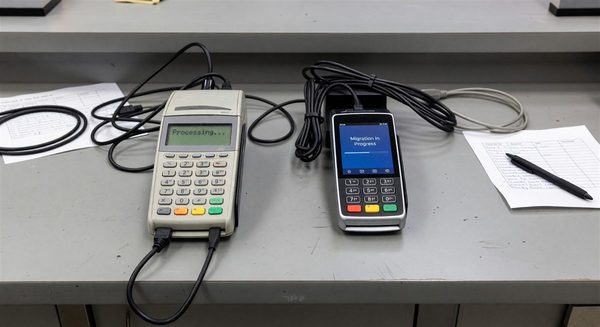
Every time a driver taps a card at a pay station, a small but consequential negotiation happens in milliseconds between your acquirer, the card networks, and the issuing bank. For most retail merchants, interchange is a background cost of doing business. For parking operators, where the average ticket can run anywhere from $2 to $25, interchange becomes a disproportionately large line item — and choosing or missing the wrong qualification tier can quietly erode revenue by thousands of dollars per month across a multi-location portfolio.
Understanding how a parking payment system routes and qualifies small-ticket transactions is not optional knowledge for operators who want to run a tight operation. This guide breaks down the mechanics of small-ticket interchange programs from Visa and Mastercard, explains what causes parking transactions to fall out of preferred tiers, and offers practical guidance for negotiating with your acquiring bank.
What Qualifies as a “Small Ticket” Transaction
In payment network terminology, a “small ticket” transaction is one where the transaction amount falls below a defined threshold — typically $15.00 or under for Visa and $15.00 or under for Mastercard, though the networks adjust these thresholds periodically and some categories carry slightly different cutoffs. The specific threshold that applies to your business depends on your merchant category code (MCC).
Parking facilities typically operate under MCC 7521 (Automobile Parking Lots and Garages) or, in some cases, MCC 7523 (Parking Meters). These codes are relevant because the card networks publish interchange rates that are MCC-specific, and not every small-ticket program applies uniformly across all MCCs.
The purpose of small-ticket programs is straightforward: when a transaction is very small, the fixed-cost component of standard interchange (the per-transaction fee, typically $0.10 to $0.22 depending on the tier) represents an outsized percentage of the sale. A $0.10 per-transaction fee on a $3.00 garage ticket is 3.3% before the percentage-of-sale rate is even calculated. Small-ticket programs reduce or eliminate the per-transaction fee in exchange for a slightly different percentage rate, producing a more predictable and often lower effective rate at low price points.
To qualify, a transaction generally must meet these baseline criteria:
- Transaction amount at or below the published threshold
- Card-present or card-emulated (NFC/contactless) environment
- Authorization and settlement within required time windows
- Correct MCC assigned to the merchant
- Transaction not manually keyed (card-not-present transactions typically do not qualify)
Visa Small Ticket Interchange Program Explained
Visa publishes its full interchange reimbursement fee schedule on visa.com, updated twice annually (April and October). The small-ticket category for qualifying merchants reduces the per-transaction component and applies a flat percentage rate rather than the standard rate-plus-fixed-fee structure.
As of recent published schedules, Visa’s small-ticket interchange for qualifying card-present consumer credit transactions has ranged in the neighborhood of 1.55% with no per-transaction fee, compared to a standard consumer credit card-present rate that might be 1.51% + $0.10. On a $5.00 transaction, that difference is:
- Standard: ($5.00 × 0.0151) + $0.10 = $0.1755 (3.51% effective rate)
- Small ticket: $5.00 × 0.0155 = $0.0775 (1.55% effective rate)
The savings on a single transaction seem small, but a parking location processing 500 daily transactions at an average of $5.00 would save roughly $49 per day — over $17,800 per year at that one location — by qualifying for small-ticket vs. falling into standard interchange on every transaction.
Visa also distinguishes between credit and debit products in its small-ticket tiers, and regulated debit (Durbin-compliant debit cards) follows a separate, capped structure under Federal Reserve Regulation II rather than the Visa interchange schedule. See the Federal Reserve’s published regulation on debit card interchange for the current cap, which as of recent periods has been set at $0.21 + 0.05% per transaction (plus a fraud-adjustment allowance).
Mastercard Small Ticket Merchant Rates
Mastercard publishes its interchange rate program on mastercard.us. Its small-ticket structure is similar in intent to Visa’s but differs in specific thresholds and rate levels.
Mastercard’s small-ticket program has historically applied to transactions under $15 for qualifying MCCs and produces a rate structure that eliminates the per-transaction fee while applying a flat percentage. Mastercard also segments its small-ticket rates by card type — consumer credit, consumer debit, commercial credit — so operators who see a high mix of business cards should be aware that commercial card interchange runs higher and may not qualify for the same small-ticket tier as consumer cards.
One important nuance: Mastercard uses a “Merit” qualification hierarchy for its card-present rates. Transactions that meet all technical requirements (correct authorization data, timely settlement, proper MCC) qualify at Merit III or Merit I levels. Small-ticket qualification layers on top of — not instead of — the Merit qualification, meaning a technically deficient authorization can fall out of both small-ticket and the preferred Merit tier simultaneously.
Operators running older payment terminals that do not transmit full authorization data (including CVV2 presence indicators and address verification for card-not-present fallback scenarios) may find their transactions being downgraded regardless of the transaction amount.
How Parking Transactions Fall Into or Out of Small-Ticket Qualification
The mechanics of qualification failure are worth understanding in detail because many parking operators assume they are receiving small-ticket rates when they are not. Common disqualification scenarios include:
Batch settlement timing. Most small-ticket programs require that the transaction be settled within 24 hours of authorization. Parking systems that authorize at entry but settle only upon exit — common in gated garage environments where session length is unknown at entry — can exceed the settlement window for multi-day parkers, causing those transactions to downgrade to a non-qualified or mid-qualified tier.
Authorization-only transactions. Some pay-on-exit systems place an authorization hold at entry without a specific dollar amount (a “$0” or “$1” authorization for validation purposes) and then settle for the actual amount hours or days later. This pattern does not meet small-ticket qualification criteria and will be settled at standard interchange rates.
Card-not-present fallback. Pay-by-phone parking apps and web-based session extensions involve card-not-present transactions by definition. These do not qualify for card-present small-ticket interchange regardless of the transaction amount. Operators who blend pay-station and pay-by-phone volume under a single merchant ID may see blended rates that obscure how much of their volume is actually qualifying.
Incorrect MCC assignment. Acquiring banks occasionally assign merchants a generic retail MCC rather than the parking-specific MCC 7521. This can disqualify transactions from parking-specific interchange tiers and small-ticket programs that are MCC-restricted. Operators should verify their MCC with their acquirer and confirm it appears correctly on processing statements.
Terminal software version. Contactless (NFC) transactions processed through EMV-compliant terminals generally carry stronger data elements that support small-ticket qualification. Magstripe fallback or outdated terminal firmware can strip required data fields from the authorization message. For a deeper look at how terminal technology affects qualification, see EMV and contactless payments in parking environments.
The Cost of Missing Small-Ticket Qualification (Real Math)
To make the cost of disqualification concrete, consider a mid-sized surface lot with the following profile:
- 300 transactions per day
- Average transaction: $6.50
- Card mix: 70% consumer credit, 20% consumer debit (regulated), 10% commercial credit
- Annual volume: ~$712,000
Under fully qualified small-ticket interchange (using illustrative Visa/Mastercard blended rates):
| Card Type | % of Volume | Effective Rate | Annual Cost |
|---|---|---|---|
| Consumer credit (small ticket) | 70% | ~1.60% | ~$7,954 |
| Regulated debit | 20% | ~$0.22 flat | ~$4,818 |
| Commercial credit | 10% | ~2.50% | ~$1,780 |
| Total | ~$14,552 |
Under standard interchange (small-ticket disqualified for consumer credit):
| Card Type | % of Volume | Effective Rate | Annual Cost |
|---|---|---|---|
| Consumer credit (standard) | 70% | ~2.10% + $0.10/txn | ~$18,000 |
| Regulated debit | 20% | ~$0.22 flat | ~$4,818 |
| Commercial credit | 10% | ~2.50% | ~$1,780 |
| Total | ~$24,598 |
The gap — roughly $10,000 per year per location — is attributable entirely to the consumer credit interchange tier. At a 10-location portfolio, that is a $100,000 annual difference that does not appear as a named line item on most processor statements. It simply shows up as a higher effective rate.
Understanding how your parking payment system handles revenue reconciliation is the first step toward catching these discrepancies. See parking revenue reconciliation for guidance on building a statement audit workflow.
How Processors Batch and Route Parking Transactions
Most parking operators process through an acquirer that uses a tiered or interchange-plus pricing model. Understanding how transactions are batched and routed helps explain why qualification failures occur even when the operator believes everything is configured correctly.
Tiered pricing bundles interchange categories into three operator-visible tiers — qualified, mid-qualified, and non-qualified — and the processor decides which transactions fall into which bucket. Operators on tiered pricing have no visibility into the actual interchange category their transactions are settling at, and the “qualified” tier the processor advertises may or may not correspond to small-ticket interchange. Many processors define their “qualified” tier to include only the most common consumer swipe transactions and route small-ticket, contactless, and rewards cards into mid-qualified or non-qualified tiers instead.
Interchange-plus pricing (also called pass-through or cost-plus pricing) passes the actual interchange rate plus a fixed markup to the merchant. Under this model, the interchange category is visible on the statement, and operators can directly verify whether transactions are qualifying at the small-ticket tier. Interchange-plus is generally preferable for parking operators who have the volume and negotiating leverage to request it.
Flat-rate processors like Square aggregate interchange and charge a single blended rate (e.g., 2.6% + $0.10 for card-present). For very low-volume or seasonal operations, flat-rate pricing may be administratively simpler. However, because the flat rate is designed to be profitable for the processor across all interchange categories, parking operators with high small-ticket volume effectively subsidize higher-interchange transactions processed by other merchants on the same flat-rate platform.
Routing also matters when the transaction involves a dual-network debit card (a card bearing both a Visa/Mastercard logo and an unaffiliated network logo like PULSE or STAR). Federal Reserve Regulation II requires that merchants be given a routing choice on debit transactions, and some acquirers route dual-network debit cards over the lower-cost unaffiliated network by default, which can produce favorable rates but may also affect small-ticket program eligibility differently depending on the network.
Negotiating Small-Ticket Rates With Your Acquirer
Acquiring banks are not uniformly forthcoming about small-ticket qualification, but operators with meaningful volume can negotiate directly. Several practical approaches:
Request interchange-plus pricing. If you are currently on tiered pricing, request a conversion to interchange-plus. The markup (typically 0.10% to 0.30% + $0.05 to $0.10 per transaction for established accounts) may be slightly higher than what appears on a tiered “qualified” rate, but the transparency allows you to audit qualification and identify disqualification patterns.
Ask for a qualification audit. Request that your processor or ISO run a transaction-level report showing the interchange category for each settlement. A high percentage of transactions settling at non-qualified or mid-qualified rates is a negotiating point — either for a rate reduction on the processor markup or for a technical remediation that moves transactions back to preferred tiers.
Verify your MCC in writing. Get written confirmation from your acquirer of the MCC assigned to each of your merchant accounts. If the MCC is incorrect, the correction can retroactively improve qualification rates.
Address batch timing if applicable. If your parking management system settles transactions at the end of a session rather than at authorization, work with your payment system vendor to implement authorization capture at the time of authorization (or within the required settlement window) for transactions where the amount is known.
Benchmark against network-published rates. The Visa and Mastercard interchange schedules are public documents. Building a simple spreadsheet that models your expected interchange at published rates — segmented by card type and transaction amount — and comparing it against your actual statement is the most reliable way to identify over-charges or systematic downgrade patterns.
Large acquirers will sometimes negotiate a “custom interchange passthrough” arrangement for high-volume parking operators that effectively guarantees small-ticket routing, though this typically requires significant monthly volume (often $500,000 or more) and is more common for large parking management companies or municipalities than for independent operators.
Further Reading
The mechanics of interchange qualification are one part of a broader understanding of how payment processing works in parking environments. For a foundation-level overview, how parking payment systems work covers the technology stack that determines whether your transactions qualify in the first place — from terminal hardware to payment gateway configuration.
For operators building a formal audit workflow, the parking revenue reconciliation guide walks through how to structure your statements, flag anomalies, and build a consistent monthly reporting cadence that would surface interchange disqualification events before they compound into significant revenue loss.
For current published interchange rate schedules, consult the official sources directly: Visa’s interchange reimbursement fees, Mastercard’s interchange rates, and Federal Reserve Regulation II for regulated debit interchange caps.