Debit cards are the majority of consumer payment volume in many North American markets, but the economics of accepting them differ sharply depending on how the transaction is routed. PIN debit — sometimes called “on-us” or “EFT” — runs across domestic debit networks with regulated interchange. Signature debit runs through the Visa or Mastercard rails at rates that look more like credit. For a parking operator processing thousands of small-ticket transactions per day, the routing decision has a real impact on processing cost per transaction.
The Two Debit Rails
Signature (dual-message) debit
Signature debit runs on the same network as a credit transaction. The card is processed as if it were a credit card — a 0100 authorization, a signature or no-CVM verification, and a later capture. Interchange is set by the card network and is generally lower than credit but higher than PIN debit, especially for small-ticket transactions.
PIN (single-message) debit
PIN debit runs on domestic debit networks such as Interlink, Maestro, STAR, PULSE, NYCE, ACCEL, and Shazam in the U.S., and Interac in Canada. The transaction is a single message — authorization and capture combined — with the PIN verified online. The Federal Reserve’s Regulation II caps interchange on debit transactions from regulated issuers at 21 cents plus 0.05% plus a 1-cent fraud-prevention adjustment for most transactions.
The Small-ticket Problem
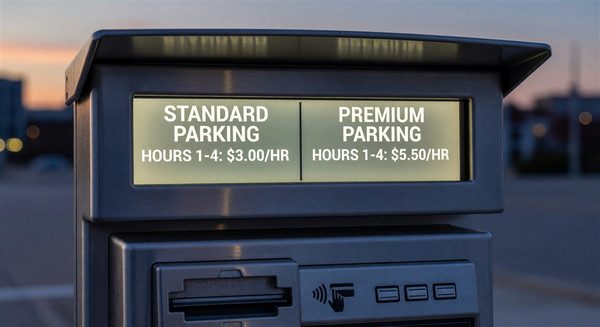
Regulation II’s fixed 21-cent component is almost always higher than the credit small-ticket interchange rate for transactions under USD 15. On a USD 3.00 street parking payment, PIN debit interchange of 22 cents plus 0.015 cents is roughly 7% of the ticket — far worse than the roughly 1.5% signature small-ticket rate.
This inverts the conventional wisdom that “PIN debit is always cheaper.” For small-ticket parking the signature rail is typically the cheaper route. This is why many pay stations are configured to suppress PIN entry for transactions below a threshold — they push the card to signature debit without a PIN prompt to capture the lower small-ticket rate.
Above roughly USD 25 to USD 30, PIN debit typically becomes cheaper than signature debit, and above USD 75 the gap widens considerably. For daily or multi-day airport parking, weekly monthly billing, or event parking at a high fee, PIN debit is usually the right route when the transaction value is high enough that the percentage component dominates the fixed fee.
Routing Mechanics
Every U.S. debit card carries at least two network logos on the back — one Visa or Mastercard signature brand and one or more domestic debit network brands. The Durbin Amendment to Dodd-Frank requires issuers to enable at least two unaffiliated networks per card so that merchants can choose. In practice the merchant’s acquirer routes the transaction through a network the merchant has signed up for, using a routing table that considers:
- Transaction amount
- Merchant’s negotiated rates on each network
- Whether the card supports the network
- Whether a PIN was entered
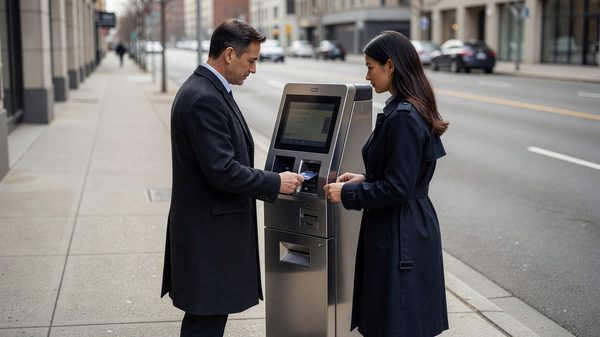
Unattended environments add a wrinkle: many parking pay stations do not expose a PIN pad at all. Without a PIN entry option the terminal cannot initiate a PIN-debit transaction and must route signature — even if PIN would be cheaper at that ticket size.
Hardware Implications for Parking
A pay station designed to route debit optimally needs:
- A PIN-pad compliant with PCI PTS (PCI Transaction Security) requirements from the PCI Security Standards Council.
- Weatherized and vandal-resistant keypad hardware for outdoor deployments.
- Software logic to decide when to prompt for PIN versus skip PIN based on amount and card BIN.
- Support for contactless PIN on high-value transactions (CDCVM on mobile wallets, or online PIN on physical cards).
Many legacy parking terminals shipped without a physical PIN pad to reduce cost and attack surface. Those terminals effectively opt out of PIN debit routing and accept signature economics for all debit transactions.
Canadian Context: Interac Flash
In Canada the Interac network operates domestic PIN-debit rails at much lower interchange than the international signature brands. Interac Flash adds contactless support up to CAD 250 per tap with no PIN, and cumulative tapping up to CAD 200 before a PIN is required. Because Canadian interchange is generally lower across the board than U.S. rates, the routing calculation is different — Interac Flash is almost always the cheapest option when the card supports it, and Canadian pay stations should accept and prefer it.
Practical Recommendations
- Track the blended debit cost per transaction against the mix of small-ticket and large-ticket volume.
- For mostly small-ticket lots (street meters, short-stay garages), signature routing with no PIN prompt is usually optimal.
- For mixed-ticket or high-average-ticket environments (airports, event parking), PIN-capable hardware pays back.
- Review your acquirer routing table annually; networks change small-ticket thresholds and interchange rates periodically.
FAQ
Can the cardholder choose the rail?
In the U.S. the cardholder can express a preference by entering or not entering a PIN at a terminal that supports both. If no PIN is entered, the transaction defaults to signature. The merchant’s acquirer ultimately controls the network selection within the choices the card supports.
Does PIN debit have chargebacks?
PIN debit has a much narrower dispute framework than signature debit. Fraud chargebacks are rare because the PIN is treated as strong cardholder authentication. Non-fraud disputes still exist but flow through the debit network rules rather than the Visa or Mastercard dispute system.
What about prepaid cards?
Prepaid debit cards route the same way as debit cards from a network-selection standpoint, but most prepaid issuers are not subject to Regulation II caps and can carry higher interchange. Check your acquirer’s interchange table before assuming parity.
Is contactless debit PIN or signature?
It depends on the card and the terminal. Contactless taps under the CVM limit are usually no-CVM signature-equivalent. Above the CVM limit a contactless transaction can prompt for online PIN or fall back to contact insert.