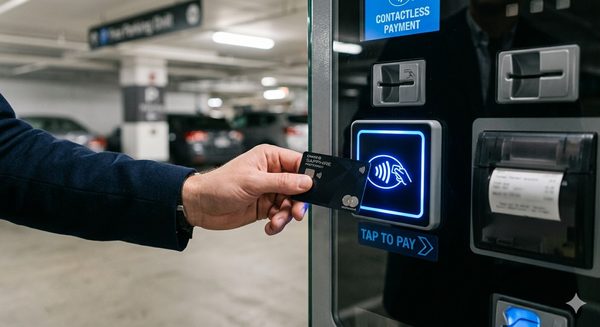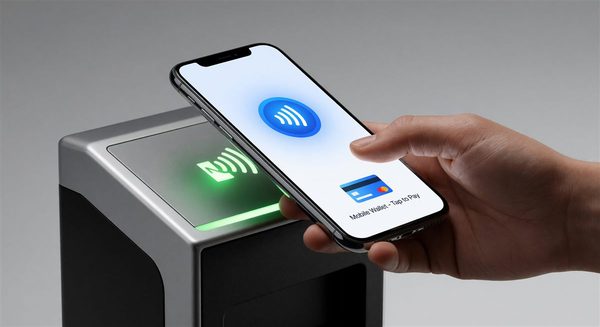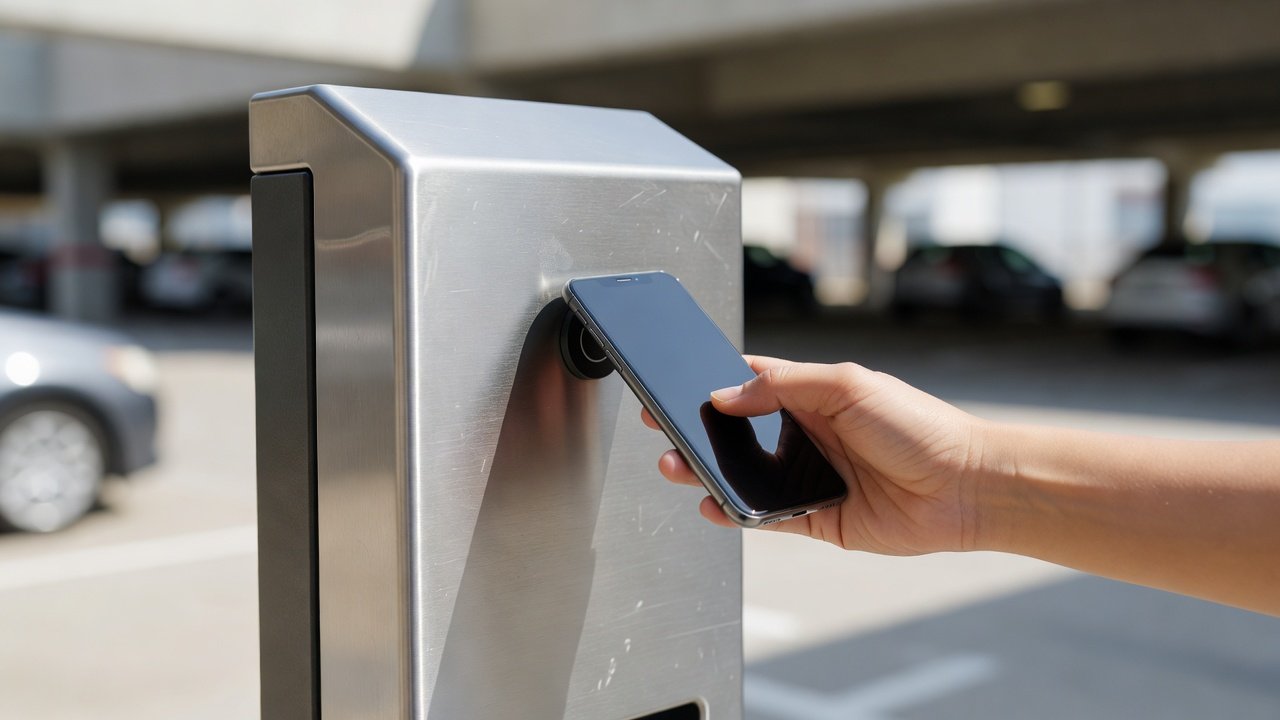
The contactless parking payment market reached USD 5.2 billion globally in 2024. Published operator data and processor aggregates now consistently show mobile wallet transactions — Apple Pay, Google Pay, Samsung Pay — accounting for 40–55% of contactless card volume at NFC-enabled pay stations in North America, depending on facility type. That number was below 5% in 2020.
The adoption curve is no longer a projection. It’s a constraint that shapes pay station hardware decisions, NFC antenna specifications, and processor contract terms for any operator placing orders in 2026.
Where the Numbers Actually Come From
Global digital wallet user counts (the “5+ billion users” figure that circulates widely) are a poor basis for planning hardware at a parking facility. Those numbers count activated wallets, not tap-to-pay transactions at physical terminals. The data relevant to pay station operators is different: transaction mix at contactless-enabled terminals by facility type.
Published patterns from processor aggregates and operator reports break roughly as follows for North American parking as of 2025:
- Airport long-term parking: 55–65% of card transactions via mobile wallet at contactless-enabled terminals
- Urban downtown garages: 40–50%
- Municipal and street meters: 30–40%
- Suburban surface lots: 25–35%
Airport facilities run highest because the customer demographic — frequent business travelers — has configured digital wallets at higher rates than general consumers. Suburban surface lots run lowest because the customer mix includes a broader demographic range and dwell time at a meter doesn’t favor fumbling with a phone.
The NFC Forum published data in 2025 showing that Release 15 of the NFC contactless spec increased the effective operating range from about 0.5 cm to up to 2 cm, with more tolerance for misalignment. That matters for outdoor pay stations where customers don’t hold their phone at precise angles.
What Drives Continued Growth Through 2026
Three structural factors are pushing adoption further, not pulling it back.
Default lock-screen payment access. On current iOS and Android versions, initiating Apple Pay or Google Pay is a double-tap or lock-screen gesture. Customers who have configured a wallet don’t have to make a deliberate choice to use it — the path of least resistance at a contactless terminal is already the digital wallet. This behavioral default is the most powerful adoption driver that doesn’t show up in market reports.
Physical card reissuance lag. When consumers receive new physical cards, there is a period where the phone wallet is current and the physical card is not yet configured in their muscle memory. During that window, digital wallet is the fallback. This creates spikes in wallet transactions that are availability-driven rather than preference-driven — but they still look the same in your transaction data.
Contactless transaction limit increases. Card scheme mandates have raised contactless limits repeatedly through 2020–2025. A typical parking transaction of $8–25 falls comfortably inside the no-PIN contactless ceiling in every major market. The limit increases removed a technical barrier that had previously forced some parking transactions to fall back to contact-chip.
The Hardware Specifications That Follow From This Data
Higher digital wallet adoption creates specific hardware requirements that operators need to translate into RFP language.
NFC Antenna Sizing and Field Strength
Physical card contactless taps and mobile wallet taps are different interactions. Cards are held flat and close; phones approach at more varied angles and distances. Pay stations with antennas sized for card tap — which describes many units installed before 2022 — produce elevated rates of transaction abandonment when a customer holds a phone at 30 degrees and the read fails. The customer tries again, fails again, then inserts a card or walks away.
The EMVCo contactless specification and NFC Forum standards for terminal antennas are minimum floors, not optimal targets. For outdoor or high-throughput applications, procurement teams should require:
- Antenna field strength testing at 2 cm distance and at 30-degree approach angle
- Multi-tap failure rates below 2% in manufacturer acceptance testing
- Firmware support for the NFC Forum Release 15 improved demodulation standard
Manufacturers who cannot provide field-test data for these scenarios are selling against a standard that didn’t contemplate the current device usage pattern.
Firmware Prompting Sequences
Mobile wallet transactions are typically faster end-to-end than chip-card transactions — the device tokenizes before the tap occurs, so the terminal authorization sequence starts from a completed token rather than an incomplete card read. But the UX gap often shows up in feedback timing: a customer taps their phone, the transaction completes in 1.2 seconds, and the terminal hasn’t surfaced a clear “approved” confirmation because it was designed for a 3-second chip read cycle.
Pay station procurement specs should include UI/UX evaluation criteria for mobile wallet flows specifically — not just EMV chip and swipe. Request firmware demonstration of Apple Pay and Google Pay approval sequences before finalizing hardware selection.
Transaction Throughput and Exit Lane Timing
Facilities with constrained exit lane throughput have reported measurable improvement when mobile wallet adoption rises, because the average transaction duration from tap to barrier open is shorter than for chip insertion. The effect is most pronounced at airports during departure rushes. Operators modeling capacity should factor in the throughput difference: chip-insert transactions typically run 6–9 seconds total; mobile wallet tap transactions typically run 3–5 seconds.
What the Adoption Data Doesn’t Tell Operators
Mobile wallet transaction counts don’t distinguish preference from availability. A customer who uses Apple Pay because they forgot their physical wallet and a customer who uses Apple Pay because they prefer it produce identical transaction records. Industry survey data suggests the preference/availability split is roughly 70/30, but the surveys have methodological limits and shouldn’t be treated as precise.
The practical implication: do not plan for a “mobile-only” facility based on current wallet adoption rates. Physical cards and cash persist as significant minority transaction types and will continue to do so for the foreseeable future. The 55% ceiling for mobile wallet at even the most adoption-favorable facility type (airport long-term parking) implies 45% of transactions are not wallet-initiated. Removing physical card acceptance would strand those customers.
PCI Scope for Digital Wallet Transactions
Mobile wallet transactions at EMV contactless terminals are tokenized before the tap — the merchant receives a device-generated payment token, not the customer’s PAN. This means mobile wallet transactions are generally out of scope for card data environment requirements in the same way as other EMV chip transactions.
However, the Responsibility Matrix in your processor agreement needs to document Apple Pay and Google Pay flows specifically, not just “tokenized contactless.” Several operators have had audit findings related to underdocumented scope for wallet-specific flows. The remediation is documentation, not technical change, but it delays audit completion.
Confirm with your processor that the current SAQ or ROC scope statement explicitly covers open-loop mobile wallet flows, and that the gateway’s data-flow diagram reflects how wallet tokens are handled differently from card tokens in dispute scenarios.
Frequently Asked Questions
Does accepting more digital wallet transactions affect my interchange rate?
Sometimes, and the direction can go either way. Apple Pay and Google Pay transactions pass through the card networks on the same underlying rail as the physical card they reference — a Visa Signature tap via Apple Pay carries similar interchange to a Visa Signature chip insert. Some processors apply a contactless or mobile wallet surcharge; others don’t. Review your processor’s statement detail to confirm wallet transactions aren’t being categorized differently from equivalent card transactions.
Should I require Apple Pay and Google Pay certification in my pay station RFP?
Yes, explicitly. Request the device’s Apple VAS or Google Smart Tap certification status, the firmware version that achieved it, and the most recent re-certification date. Certification lapses when operating system updates change the tap behavior, and some manufacturers lag on recertification. An uncertified device may process most wallet transactions but fail on specific device models or OS versions.
Is QR code an alternative to NFC for digital wallet acceptance?
QR-based payment (scanning a code displayed on the terminal or in an app) is a separate flow that doesn’t require NFC. Some mobile parking apps use QR codes rather than NFC tap. In terms of transaction volume, NFC-based mobile wallet tap remains the dominant contactless method at pay stations in North America, with QR representing a smaller share except in markets where specific apps drive it. For pay station hardware procurement, NFC for open-loop wallets and QR for app-based flows are complementary, not competing.