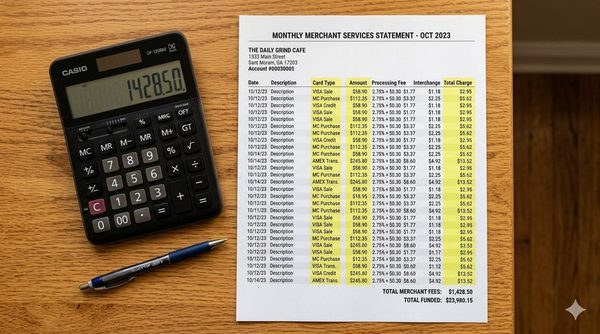
Senators Roger Marshall and Dick Durbin reintroduced the Credit Card Competition Act in January 2026, with bipartisan sponsorship and an endorsement from the executive branch. The mechanism is narrow and specific: issuers with assets over $100 billion would have to enable at least two credit card networks on their cards, and the second network could not simply be the other of the two largest — if a card runs on Visa, the alternative must be something like Discover, NYCE, Star, or Shazam. Merchants would control routing. The Visa–Mastercard duopoly currently accounts for over 80 per cent of the US credit network market across more than 576 million cards.
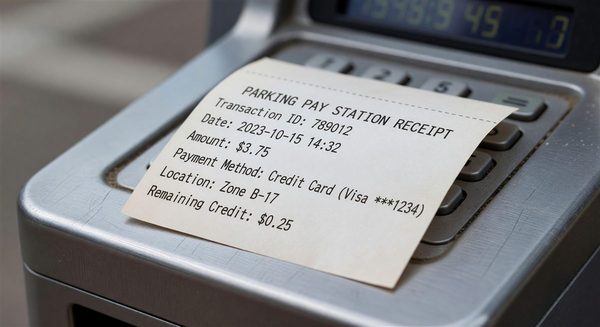
Parking has particular exposure to interchange because of ticket size, so it is worth working through what this would and would not change.
Why parking feels interchange more than most
Interchange on a credit transaction is typically a percentage plus a fixed component. On a $100 restaurant bill, the fixed component is negligible. On a $3.50 hourly parking session, it is not — it can approach or exceed the percentage component, making the effective rate on small parking transactions substantially higher than the headline percentage suggests.
This is why parking operators have pushed toward session aggregation, daily maximums, account-based models that batch multiple sessions into one charge, and minimum transaction structures. All of those are responses to fixed-fee economics.
Routing competition attacks the rate, not the structure. That distinction determines how much relief it actually delivers.
The debit precedent, and its limits
The Durbin Amendment applied a comparable dual-routing requirement to debit in 2010, and the debit experience is the best available guide.
What happened there: routing competition did reduce merchant costs on debit, meaningfully so for merchants with the volume and technical capability to implement least-cost routing. What also happened: the savings were uneven, concentrated among larger merchants with sophisticated processing arrangements, and smaller merchants often saw limited benefit because their processors did not pass through the routing choice or because their volume did not justify the implementation.
The lesson for parking is not that routing competition fails. It is that the benefit accrues to merchants positioned to use it, and that positioning is a function of processing arrangements rather than of the law.
Who in parking would actually benefit
Large operators with direct acquiring relationships. An operator processing across hundreds of facilities, with a direct processor relationship and the ability to configure routing rules, is exactly the profile that captured debit routing savings. This group would benefit.
Operators using platform or facilitator arrangements would benefit less. If your transactions are processed by a mobility platform as merchant of record, the routing decision is the platform’s, and whether savings reach you depends entirely on your commercial terms with them. Many operators are in this position without having thought about it.
Small and single-facility operators would benefit least. Their processing runs through arrangements where routing is not exposed as a configurable choice, and their volume gives them no leverage to demand it.
Alternative networks would need parking-relevant capability. A second network only helps if it can actually carry the transaction type. For unattended, contactless, small-ticket, sometimes-offline parking transactions, the alternative network’s support for the relevant authorisation flows is a real question, not a formality.
What would not change
The fixed-fee problem on small tickets is structural. Routing competition may reduce the rate charged by whichever network wins the transaction, but nothing in the bill addresses the economics of a $3.50 charge carrying a per-transaction component.
Network rules on unattended transactions, deferred authorisation, and estimated-amount authorisations — all central to how parking works — are set by the networks and are not the bill’s subject.
And the bill remains a bill. Prior versions have been introduced and not enacted. Political momentum and executive endorsement are meaningful but not dispositive, and the financial-services industry opposition is well funded and well practised.
What to do while it is pending
Nothing in this bill requires action now, but it does suggest a useful piece of homework.
Find out whether you can route. Ask your processor directly: for debit transactions today, do you have least-cost routing enabled, and who makes that decision? Many operators discover that routing choice exists and has never been configured. That is available savings under current law, independent of the CCCA.
Know your merchant-of-record map. For each revenue channel — on-site terminals, mobile app, reservation platform, in-car payment — establish who the merchant of record is. Channels where you are not MOR are channels where any future routing benefit reaches you only through renegotiation.
Get your effective rate by ticket band. Pull processing costs as a percentage of revenue, segmented by transaction size. Most operators know their blended rate and not the shape underneath it. The shape is what tells you whether your problem is rate or structure — and if it is structure, the answer is aggregation and account-based charging, which is available now and does not depend on Congress.