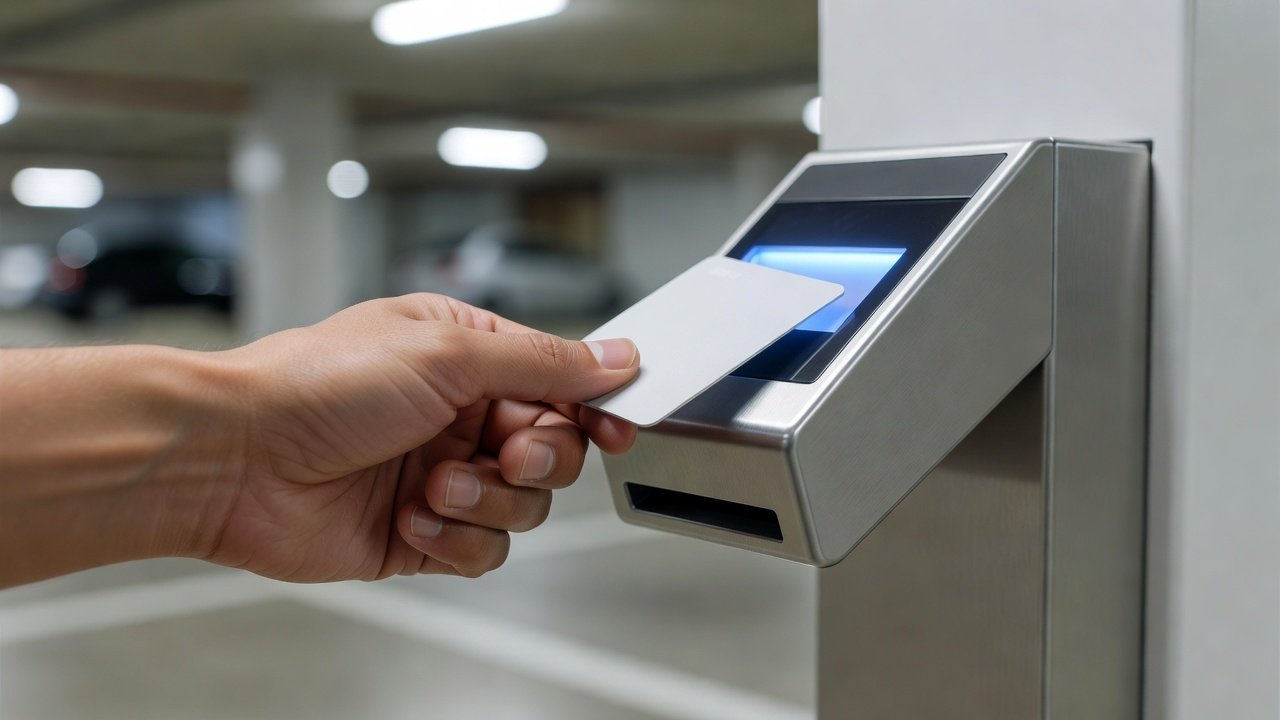
Capital One has started moving its debit cards off Visa and Mastercard and onto the Discover Global Network, the payment rails it inherited when its $35.3 billion acquisition of Discover Financial Services closed on May 18, 2025. Since the middle of 2025 the company has been reissuing more than 25 million debit cards on the Discover Network, and it has said it intends to migrate all of its debit cards, plus a meaningful share of its credit cards, within roughly two years of the deal closing. For parking operators, that reissuance quietly changes the economics of every Capital One debit tap at the pay station, and it is worth understanding why before the acceptance costs show up on a processing statement.
Why the Network Behind a Card Matters to Your Costs
When a driver pays at a gated exit or a pay-on-foot machine, the fee the operator ultimately absorbs is built largely from interchange, the amount the merchant’s acquirer passes to the card issuer. Interchange is set by the network the card runs on, so the same physical card can carry very different acceptance costs depending on whether it is branded Visa, Mastercard, or Discover.
Discover is structurally different from Visa and Mastercard. Visa and Mastercard operate four-party models, connecting separate issuers and acquirers, and they publish interchange schedules that thousands of unaffiliated banks receive. Discover has historically run closer to a three-party model, acting as network and issuer at once. Now that Capital One owns both the card program and the network, the line between issuer interchange and network economics blurs in a way that does not exist when a Capital One card runs on Visa.
The Durbin Amendment and the Exemption Question
The Durbin Amendment, part of the 2010 Dodd-Frank Act and implemented through the Federal Reserve’s Regulation II, caps debit interchange for issuers holding more than $10 billion in assets. The cap sits at roughly 21 cents plus 0.05 percent of the transaction, with a possible extra cent for fraud-prevention compliance. Capital One is far above the $10 billion threshold, so its debit interchange has long been regulated at those capped levels on Visa and Mastercard.
The migration to Discover raises a genuine and actively debated question about whether that cap still bites in the same way. Payments commentators, including reporting in American Banker, have flagged that a bank owning its own network may be able to structure the merchant-paid economics of a three-party system so that they fall outside the interchange Durbin was written to cap. Several processing analysts have gone further, estimating that Capital One debit on Discover could carry unregulated rates in the range of roughly 1.1 percent plus a fixed amount card-present, well above the Durbin-capped figure.
Two cautions belong here. First, those specific unregulated rate estimates come from processor and industry commentary, not from a Federal Reserve or Capital One published schedule, so treat them as directional rather than confirmed. Second, whether a large issuer can fully sidestep the Durbin cap by moving cards onto an affiliated network is a contested legal and regulatory point, not a settled outcome. The broader debit-interchange rulebook is itself unsettled: the Federal Reserve has proposed lowering the cap, and the regulation has drawn litigation over the past two years. Operators should plan for a moving target rather than a fixed new number.
Regulation II Routing Still Gives Merchants a Lever
The migration does not hand issuers unlimited control, because Regulation II also governs routing, not just interchange. Reg II requires that every debit card be enabled on at least two unaffiliated networks so the merchant, not the issuer, can choose how a transaction routes. In October 2022 the Federal Reserve extended that two-network requirement explicitly to card-not-present transactions, with compliance effective July 1, 2023, closing a gap that had let some e-commerce debit volume default to a single network.
In practice, that means a Capital One debit card reissued on Discover must still carry a second unaffiliated network, typically a PIN or EFT debit network, that the operator’s processor can route to. Section 235.7 of Reg II bars an issuer or network from inhibiting a merchant’s ability to direct routing across the enabled networks. For a parking operator, the practical implication is that at least some debit volume from these cards may be routable over a lower-cost alternative network rather than automatically settling on the more expensive Discover path. Whether that lever is actually pulled depends entirely on how the operator’s acquirer configures least-cost routing.
What Parking Operators Should Watch on Their Statements
The financial exposure here is modest per transaction but real at scale. A parking operation running high debit volume, such as a busy airport garage or a monthly-permit-heavy municipal lot, processes enough taps that a shift from capped to uncapped debit interchange on even a single large issuer’s cards is measurable over a quarter. Capital One’s card base is large, so its debit cards are not a rounding error in most consumer-facing lots.
A few concrete steps put an operator ahead of the change:
- Pull interchange-level detail, not blended fees. A blended or flat-rate processing plan hides which cards cost what. Ask the acquirer or processor for interchange-plus reporting so Discover-branded debit is visible as its own line rather than buried in an average.
- Ask the processor directly about least-cost debit routing. Confirm that the pay-station and lane hardware, and the processor’s configuration, actually enable the second Reg II network and route to it where it is cheaper. This is the single most actionable lever available.
- Watch the Discover debit share climb. Because the reissuance is rolling out over roughly two years, the share of transactions carrying the new economics will rise gradually. Trend it rather than reacting to a single statement.
- Revisit contracts at renewal. If a processing agreement is up, treat the debit-network shift as a reason to press for interchange-plus pricing and explicit routing commitments rather than accepting a blended rate that quietly absorbs the increase.
The Capital One and Discover integration is one of the larger structural changes to hit US card acceptance in years, and debit is where it lands first. None of it requires a parking operator to change equipment or acceptance policy tomorrow. What it does reward is visibility: operators who can see Discover-branded debit as its own cost line, and who confirm their processor is routing debit intelligently under Regulation II, will keep the change from quietly eroding net revenue while operators on blended pricing never see it coming.