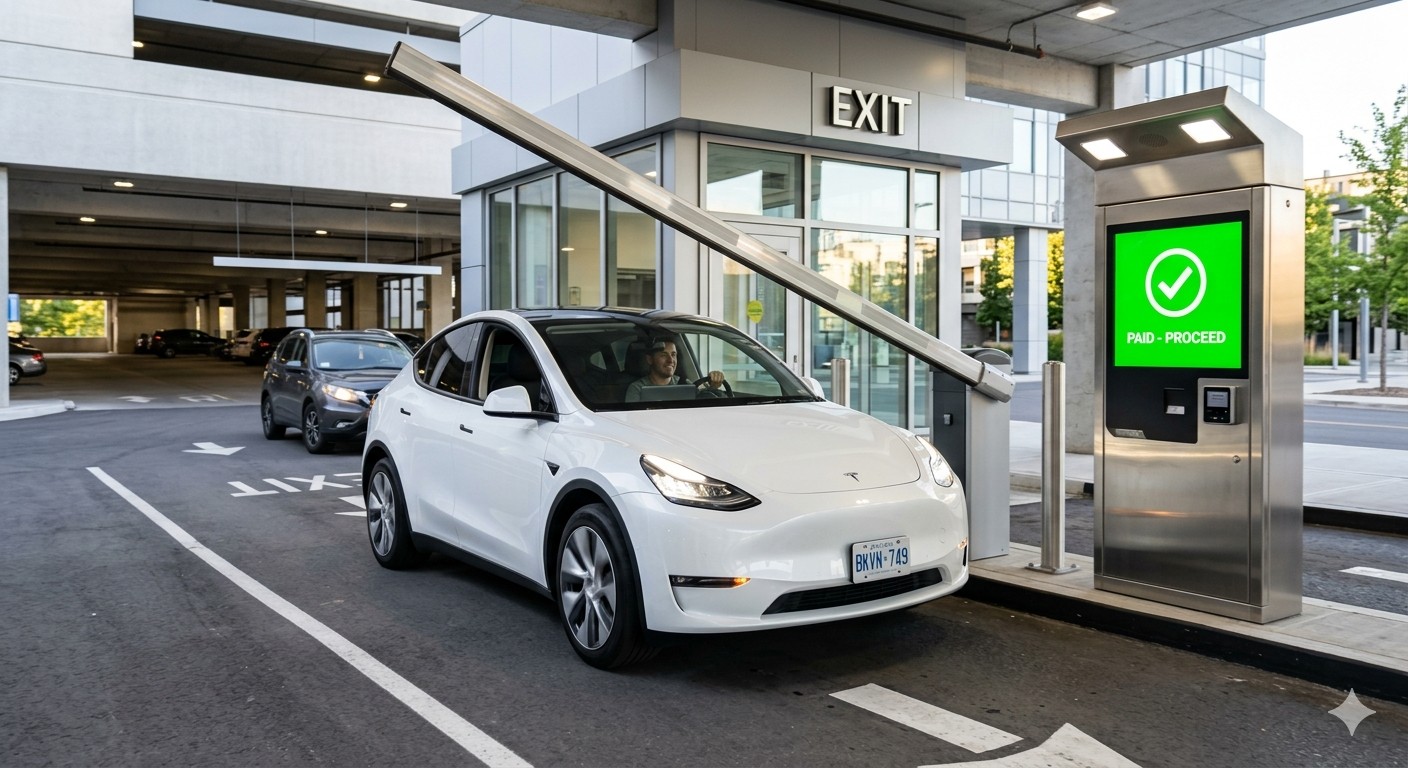
A driver pulls up to your exit barrier. They fumble for a ticket, insert it into the reader, wait for the amount to display, dig out a credit card, insert the chip, wait for authorization, wait for the receipt to print, then wait for the gate to rise. Thirty seconds have passed. Multiply that by 200 exits during a Friday evening rush, and you have a line of frustrated drivers stretching back into the garage.
Payment friction is the sum of every delay, confusion, and unnecessary step between a parker deciding to leave and actually driving away. It affects customer satisfaction, facility throughput, and ultimately revenue. Operators who reduce friction see faster lane turnover, fewer abandoned transactions, and higher willingness among parkers to return.
This is not about installing the most expensive technology available. It is about systematically identifying where time and effort are wasted in the payment process and eliminating those bottlenecks.
What Creates Payment Friction in Parking
Before you can reduce friction, you need to understand where it lives. Payment friction in parking comes from several sources.
Physical Interaction Delays
Every physical step adds time. Taking a ticket, finding it later, inserting a card, waiting for chip authorization, collecting a receipt, and storing it all represent seconds that accumulate into minutes during peak periods.
| Payment Method | Avg. Transaction Time | Key Friction Points |
|---|---|---|
| Cash at pay station | 45-90 seconds | Bill feeding, coin counting, change dispensing |
| Chip card insertion | 15-25 seconds | Card orientation, chip read time, receipt printing |
| Contactless tap | 3-8 seconds | Minimal, mostly gate response time |
| Mobile app (pre-paid) | 0 seconds at exit | Setup friction occurs earlier, at time of parking |
| LPR-based (account linked) | 0 seconds at exit | Registration friction occurs once, during enrollment |
Cognitive Load
If a parker has to figure out how to use your payment system, that is friction. Unclear instructions on pay stations, unfamiliar payment flows, or confusing rate displays all slow people down. This is especially pronounced at facilities with infrequent visitors, such as airports and event venues.
System Processing Delays
Authorization holds, network latency to payment processors, slow receipt printers, and sluggish gate mechanisms all contribute. These are often invisible to operators who do not time their own exit process.
Queue-Based Delays
Even if each individual transaction is fast, a single payment lane creates a bottleneck. The friction is not in the transaction itself but in waiting behind others who are transacting.
Strategies That Actually Reduce Friction
Here are the most effective approaches, ranked roughly by impact relative to implementation complexity.
1. Enable Contactless Payments Everywhere
Contactless tap-to-pay is the single most impactful friction reducer for card-based transactions at physical terminals. A tap transaction completes in under five seconds compared to 15-25 seconds for chip insertion. There is no card orientation confusion, no chip read failures, and no waiting for the card to be returned.
Modern payment terminals from Flowbird, Hectronic, Scheidt & Bachmann, Skidata, IPS Group, and T2 Systems all support contactless readers. If your terminals are more than five years old, upgrading the payment modules to support NFC/contactless is worth the investment purely for throughput improvement.
For a deeper look at the technology, see our guide on EMV and contactless payments in parking.
2. Implement Pay-Before-Exit Stations
Pay-on-foot stations inside the garage allow parkers to pay before returning to their vehicles. When they reach the exit lane, they insert their validated ticket and the gate rises immediately, with no payment processing delay at the exit point.
This shifts the payment friction from the exit lane (where it causes queuing) to the lobby or elevator area (where it does not). It also gives parkers more time to complete payment without pressure from a line of cars behind them.
3. Offer Mobile Payment Options
Mobile parking payments let parkers pay from their phone while walking to their car. The exit gate recognizes their vehicle (via LPR or a scanned code) and opens without any physical transaction at the lane.
The friction trade-off here is important to understand. Mobile payment eliminates exit friction entirely, but it introduces setup friction: the parker has to download an app, create an account, and enter payment information. For facilities with repeat visitors (office buildings, monthly parkers), this is an excellent trade. For facilities with mostly one-time visitors (tourist attractions, event venues), adoption rates will be lower.
4. Deploy License Plate Recognition (LPR) for Payments
LPR-based payment systems eliminate physical media entirely. Cameras capture the plate at entry, the system tracks duration, and payment is charged to a pre-registered account or handled via a mobile payment flow linked to the plate.
LPR-based parking payments represent the lowest-friction exit experience possible: the driver simply approaches the exit, the camera reads the plate, and the gate opens. Transaction time at the exit: effectively zero.
The operational consideration is coverage. LPR works best when a high percentage of parkers are enrolled. For the unenrolled, you still need a fallback payment method, which means maintaining dual infrastructure during the transition period.
5. Eliminate Receipt Printing by Default
Receipt printers are one of the most common mechanical failure points in pay stations, and printing adds 3-8 seconds to every transaction. Switch to digital receipts as the default, with physical printing available only on request (a button press). Most parkers do not need or want a paper receipt.
6. Optimize Pay Station User Interface
The software interface on your pay stations directly affects transaction speed. Best practices for low-friction interfaces include the following.
- Display the amount owed immediately and prominently. Do not make the parker navigate menus to find their balance.
- Minimize button presses. Every additional screen or confirmation step adds seconds.
- Use clear visual hierarchy. The card reader location, the amount, and the exit instructions should be obvious at a glance.
- Support multiple languages if your facility serves international visitors. Language selection should be a single tap, not a menu dive.
- Provide real-time feedback. When a card is processing, show a clear progress indicator. Parkers who are unsure whether the system is working will pull their card out prematurely, causing failed transactions.
7. Add Express Exit Lanes
For facilities with high throughput requirements, dedicated express lanes for pre-paid or contactless-only parkers reduce queuing for everyone. The express lane handles the fastest transactions while the standard lane accommodates cash payers and those who need assistance.
8. Pre-Authorize at Entry
Some modern systems pre-authorize a card at entry, capturing the payment method before the parker even enters the facility. At exit, the system calculates the amount, charges the pre-authorized card, and opens the gate, all without the parker needing to present a card again.
This approach requires parking equipment that supports pre-authorization workflows, and you need to handle edge cases like expired authorizations for long-term stays. But for short-term parking with predictable durations, it is remarkably effective.
Measuring Payment Friction
You cannot reduce what you do not measure. Here are the metrics that matter.
Transaction Time at Exit
Time from when the vehicle stops at the exit lane to when the gate opens. Measure this by payment type to identify which methods are slowest.
| Metric | Target | Action Threshold |
|---|---|---|
| Contactless tap exit time | Under 8 seconds | Over 12 seconds |
| Chip card exit time | Under 20 seconds | Over 30 seconds |
| Pay-on-foot validated exit | Under 5 seconds | Over 10 seconds |
| Cash payment exit time | Under 60 seconds | Over 90 seconds |
Queue Length at Peak
Count the maximum number of vehicles waiting in the exit queue during peak periods. If the queue regularly exceeds five vehicles, you have a throughput problem.
Failed Transaction Rate
Track the percentage of transactions that fail on first attempt (declined cards, read errors, timeout). Each failure adds 30-60 seconds as the parker retries or switches payment methods. A failed transaction rate above 3% indicates equipment or network issues.
Payment Method Mix
Track what percentage of transactions use each payment method. A shift toward contactless and mobile indicates that your friction-reduction efforts are working. If 80% of transactions are still chip-insert, you may need to do more to promote faster alternatives.
Leading pay station manufacturers design their payment hardware specifically to minimize transaction time while supporting the full range of modern payment methods — EMV, NFC, mobile, and cash where required.
The Economics of Friction Reduction
Reducing payment friction is not just about customer satisfaction. There is a direct financial case.
Throughput Revenue
If your exit lane processes 120 cars per hour with chip-insert payments and 200 cars per hour with contactless, that is a 67% increase in capacity. During peak demand periods when your facility is full and turning away customers, that additional throughput translates directly to additional revenue.
Reduced Equipment Maintenance
Contactless readers have no moving parts in the card path. They experience fewer jams, fewer read failures, and lower maintenance costs than chip readers. Receipt printers that default to digital receipts use less paper, fewer ribbons, and require less frequent service.
Lower Abandonment
Parkers who cannot figure out how to pay, or who give up waiting in line, will sometimes tailgate through behind another vehicle or find an attendant to let them out for free. Every abandoned transaction is lost revenue.
Customer Retention
For monthly and repeat parkers, payment friction is a significant factor in facility choice. The garage that lets them tap and go will win over the one that requires exact change at a 1990s-era pay station. The International Parking & Mobility Institute has identified frictionless payment as a top driver of customer loyalty in parking.
Implementation Priority Matrix
Not every operator can overhaul their entire payment infrastructure at once. Here is a practical prioritization.
| Priority | Action | Cost | Friction Reduction |
|---|---|---|---|
| 1 (immediate) | Enable contactless on existing terminals | Low (firmware/module update) | High |
| 2 (quick win) | Default to digital receipts | Minimal (configuration change) | Moderate |
| 3 (near-term) | Optimize pay station UI/UX | Low-moderate (software update) | Moderate |
| 4 (medium-term) | Add pay-before-exit stations | Moderate (new hardware) | High |
| 5 (medium-term) | Implement mobile payment option | Moderate (software + integration) | High for repeat visitors |
| 6 (longer-term) | Deploy LPR-based payment | High (cameras + software + integration) | Very high |
| 7 (longer-term) | Add express exit lanes | High (civil work + equipment) | High at peak times |
Common Mistakes When Reducing Friction
- Adding technology without removing steps. Offering mobile payment is pointless if the mobile-paid parker still has to insert a ticket at the exit. The old process must be eliminated, not just supplemented.
- Ignoring the fallback experience. When your contactless reader fails, what happens? If the fallback is a 90-second cash transaction, your peak-time queue collapses. Always design the failure mode to be nearly as fast as the primary mode.
- Optimizing only for regulars. Monthly parkers will learn any system. First-time visitors will not. Design for the parker who has never been to your facility before.
- Neglecting signage and wayfinding. The fastest payment system in the world does not help if the parker cannot find the pay station. Clear directional signage reduces the time parkers spend confused, which is friction even before they reach the terminal.
Key Takeaways
- Contactless payments are the highest-impact, lowest-cost friction reducer for most parking operations. If you do nothing else, enable contactless on your existing terminals.
- Measure transaction times by payment method to identify your biggest bottlenecks. What gets measured gets improved.
- Shift payment away from the exit lane using pay-before-exit stations, mobile apps, or LPR-based systems. The exit lane is the worst place for a slow transaction.
- Design for first-time visitors, not just regulars. The lowest-friction system is one that requires no learning curve.
- Build a phased upgrade plan that prioritizes quick wins (contactless, digital receipts, UI optimization) before larger infrastructure investments (LPR, express lanes).
The parking industry is moving unmistakably toward frictionless payment. The operators who lead this transition will see higher throughput, happier customers, and stronger revenue. Those who wait will find themselves losing business to competitors whose facilities are simply easier to leave.