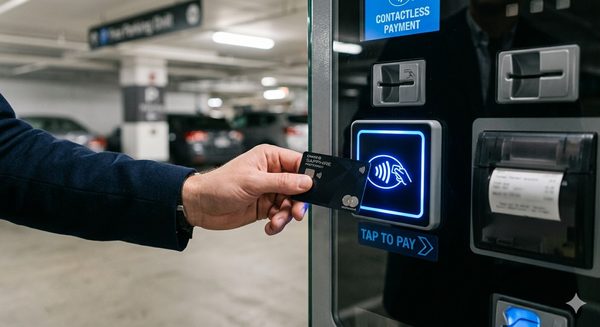
Every time a driver taps a credit card at a parking pay station, swipes at a gate, or enters card details in a mobile app, sensitive payment data flows through your infrastructure. If that data is intercepted, modified, or stored improperly, the consequences range from steep fines to loss of the ability to accept card payments entirely.
The Payment Card Industry Data Security Standard (PCI DSS) exists to prevent exactly that. But for parking operators, compliance can feel murky. You are not a bank or an e-commerce retailer. Your pay stations sit in exposed, unattended environments. Your staff may not have IT security backgrounds. And yet the same standards apply.
This guide breaks down what PCI compliance means specifically for parking payment systems, where operators most commonly fall short, and what practical steps you can take to reduce both risk and complexity.
What Is PCI DSS and Why Does It Apply to Parking?
PCI DSS is a set of security requirements maintained by the PCI Security Standards Council (PCI SSC). Any organization that stores, processes, or transmits cardholder data must comply. That includes parking garages, surface lots, airports, hospitals, universities, and municipalities that accept credit or debit card payments.
The standard currently sits at version 4.0.1, released in 2024, with a compliance deadline for several new requirements set for March 2025. If your operation has not reviewed its compliance posture since version 3.2.1, now is the time.
PCI DSS Compliance Levels
Your compliance level depends on the number of card transactions you process annually. Most parking operators fall into Level 3 or Level 4.
| Level | Annual Transactions | Validation Requirements |
|---|---|---|
| Level 1 | Over 6 million | Annual on-site audit by QSA, quarterly network scans |
| Level 2 | 1 million to 6 million | Annual self-assessment questionnaire (SAQ), quarterly scans |
| Level 3 | 20,000 to 1 million (e-commerce) | Annual SAQ, quarterly scans |
| Level 4 | Under 20,000 (e-commerce) or up to 1 million (other) | Annual SAQ, quarterly scans recommended |
Even at Level 4, your acquiring bank can mandate compliance validation. Do not assume that low transaction volume means you can ignore PCI.
The Parking-Specific Challenges
Parking payment environments introduce security concerns that differ from typical retail point-of-sale setups. Understanding these challenges is the first step toward addressing them.
Unattended Payment Terminals
Pay stations in garages and surface lots operate 24/7 without staff supervision. This makes them targets for physical tampering, including skimming devices attached to card readers. The International Parking & Mobility Institute has published guidance noting that unattended terminals require additional physical security controls beyond what attended retail terminals need.
Distributed Locations
A single parking operator might manage 20 garages across a city, each with multiple pay-on-foot stations and entry/exit lane equipment. Every device that touches card data is in scope for PCI compliance. Equipment from manufacturers like Scheidt & Bachmann, Flowbird, Skidata, Hectronic, IPS Group, and T2 Systems all must meet these requirements regardless of brand.
Legacy Equipment
Some parking facilities still run equipment installed a decade or more ago. Older terminals may not support point-to-point encryption (P2PE) or EMV chip and contactless payments, which are among the most effective ways to reduce PCI scope.
Mixed Payment Channels
Modern parking operations often accept payments through multiple channels: pay stations, entry/exit lane readers, mobile apps, online pre-booking portals, and validation systems. Each channel can have a different SAQ type and different security requirements.
Key PCI DSS Requirements for Parking Operators
PCI DSS contains 12 core requirements organized into six categories. Here is how the most relevant ones apply to parking.
Requirement 1: Network Security Controls
Your parking payment network must be segmented from other systems. The revenue management software, security cameras, elevator controls, and payment terminals should not share an unprotected flat network. Use firewalls and access control lists to isolate the cardholder data environment (CDE).
Requirement 3: Protect Stored Account Data
The simplest advice: do not store cardholder data if you do not need it. Most parking operators should not be storing full card numbers anywhere in their systems. If your pay stations or management software are writing card numbers to local logs or databases, that is a compliance violation and a significant breach risk.
Requirement 6: Secure Software
If you run custom parking management software or web-based payment portals, those applications must follow secure development practices. This includes regular patching, vulnerability assessments, and code reviews.
Requirement 9: Physical Access Controls
For parking, this is critical. Pay stations in public garages need tamper-evident enclosures, locks rated for the environment, and regular inspection schedules. Staff should check terminals for skimming devices as part of routine maintenance rounds.
Requirement 11: Regular Testing
Quarterly vulnerability scans by an Approved Scanning Vendor (ASV) are required for any system component with an external-facing IP address. If your pay stations communicate over public internet connections, those endpoints need scanning.
Reducing Your PCI Scope: Practical Strategies
Full PCI compliance across a large parking operation can be expensive and complex. The most effective approach is to reduce the scope of what needs to be compliant in the first place.
1. Use Point-to-Point Encryption (P2PE)
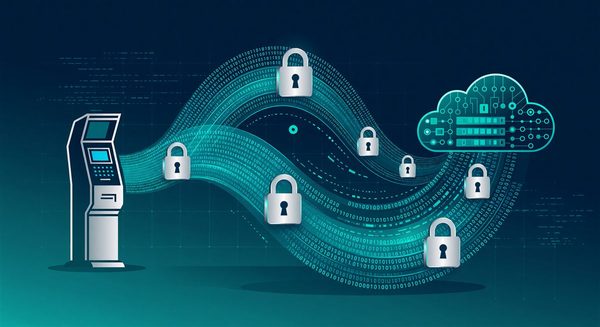
P2PE-validated solutions encrypt card data at the moment of swipe or tap, before it ever reaches your payment terminal’s operating system. The data remains encrypted until it reaches the payment processor’s secure environment. Your systems never see unencrypted card numbers, which dramatically reduces your compliance scope.
Major parking equipment manufacturers now offer P2PE-validated payment modules. When evaluating new payment equipment, P2PE support should be near the top of your requirements list.
2. Adopt Tokenization
Tokenization replaces card numbers with non-sensitive tokens for recurring transactions, monthly parkers, and validation lookups. If your parking management system needs to reference a payment method (for example, to charge a monthly parker or process a validation), it should use tokens rather than stored card numbers.
3. Outsource Payment Processing
Using a hosted payment page or redirect for online parking reservations means card data never touches your web servers. For in-lane payments, integrated payment terminals from certified providers handle the transaction without exposing card data to your parking access control system.
4. Segment Your Network
Even within the CDE, segment aggressively. The network connecting your pay stations should not be the same network your office computers use for email. Proper segmentation reduces the number of systems subject to PCI requirements and limits the blast radius of any potential breach.
SAQ Types Relevant to Parking
The Self-Assessment Questionnaire you complete depends on how you accept and process payments.
| SAQ Type | Applies When | Common Parking Scenario |
|---|---|---|
| SAQ B | Imprint-only or standalone dial-out terminals | Legacy standalone terminals with phone line connections |
| SAQ B-IP | Standalone IP-connected terminals (no electronic cardholder data storage) | Modern pay stations with integrated payment terminals |
| SAQ C | Payment application systems connected to internet | Parking management software processing payments |
| SAQ C-VT | Virtual terminal on isolated computer | Manual card entry at staffed booths |
| SAQ D | All other merchants | Complex multi-channel environments |
SAQ D is the most comprehensive and burdensome. Your goal should be to architect your payment environment so you qualify for a simpler SAQ type, ideally B-IP or C.
Common Compliance Mistakes in Parking Operations
After working with dozens of parking operations on PCI readiness, several patterns emerge repeatedly.
- Storing full card numbers in management software databases. Some legacy systems were designed before PCI awareness was widespread. Audit your database tables.
- Shared Wi-Fi networks. Pay stations on the same Wi-Fi as public guest access is a serious violation.
- No physical inspection schedule. Skimming devices can be installed in minutes. Without regular checks, they may go undetected for weeks.
- Unpatched terminal firmware. Payment terminal manufacturers release security updates. Ignoring them creates known vulnerabilities.
- Missing or incomplete logging. PCI requires audit trails for all access to cardholder data. If your system does not log who accessed what and when, you are not compliant.
- Third-party vendor assumptions. Using a cloud-based parking management system does not automatically make you compliant. You must verify your vendor’s PCI compliance status and understand the shared responsibility model.
Building a Compliance Roadmap
For operators starting from scratch or updating to PCI DSS v4.0.1, here is a practical sequence.
- Inventory all payment channels. Map every device, application, and network that touches card data.
- Identify your SAQ type. Work with your acquiring bank or a Qualified Security Assessor (QSA) to determine which SAQ applies.
- Conduct a gap analysis. Compare your current state against the applicable SAQ requirements.
- Prioritize P2PE and tokenization. These two technologies provide the biggest scope reduction for the investment.
- Implement network segmentation. Isolate payment systems from non-payment systems.
- Establish physical inspection routines. Train staff to inspect terminals for tampering. Document inspections.
- Schedule quarterly ASV scans. Engage an Approved Scanning Vendor for external vulnerability scans.
- Document everything. PCI compliance is as much about documentation as it is about technical controls. Policies, procedures, and evidence of compliance must be maintained.
What Happens If You Are Not Compliant
Non-compliance carries real consequences, even if you have never experienced a breach.
- Fines from card brands. Visa and Mastercard can levy fines of $5,000 to $100,000 per month for non-compliance, passed through your acquiring bank.
- Increased transaction fees. Non-compliant merchants often face higher per-transaction processing rates.
- Breach liability. If a breach occurs and you are not PCI compliant, you may be liable for the costs of card reissuance, fraud losses, and forensic investigation. These costs can run into hundreds of thousands of dollars.
- Loss of card acceptance. In the worst case, card brands can revoke your ability to accept their cards entirely.
The National Parking Association has emphasized that operators should treat PCI compliance not as a checkbox exercise but as an ongoing operational discipline tied to revenue protection.
Key Takeaways
- PCI DSS applies to every parking operation that accepts card payments, regardless of size or transaction volume.
- Unattended terminals and distributed locations create parking-specific challenges that require additional physical security controls.
- P2PE, tokenization, and network segmentation are the most effective strategies for reducing compliance scope and cost.
- The shift to EMV and contactless payments supports compliance goals by reducing the risk of card-present fraud.
- Document everything. Policies, inspection logs, network diagrams, and vendor compliance certificates are as important as the technical controls themselves.
- Start with a gap analysis against PCI DSS v4.0.1 requirements, prioritize scope reduction, and build compliance into your operational routines rather than treating it as an annual event.
PCI compliance is not optional, and it is not something you achieve once and forget. But with the right architecture and operational habits, it does not have to be an overwhelming burden either. The parking operators who get this right protect their revenue, their reputation, and their customers.