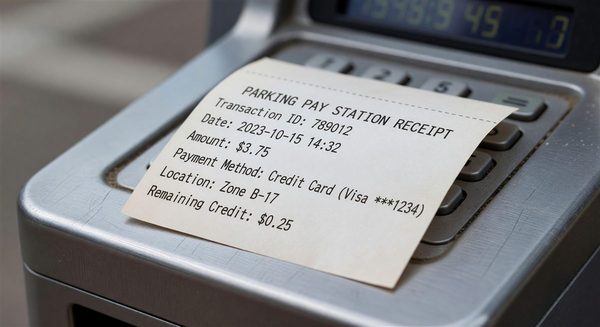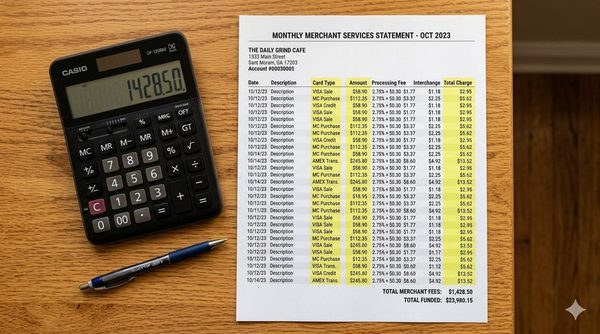
A parking operation processing $8 million annually in card transactions is running a business that looks nothing like a retail merchant at the same volume. The average ticket is $12 — not $85. The cardholder interaction is unattended. Chargebacks arrive from customers who don’t remember the transaction. And MCC 7523 qualifies for interchange categories that most general merchant-services guides don’t cover.
Acquirer selection for high-volume, low-ticket parking operations requires evaluating dimensions that standard procurement processes miss. Here is the framework operators who get it right are applying.
Why General Acquirer Evaluation Criteria Don’t Transfer
Most acquirer evaluation frameworks assume a merchant who sells discrete products, has an average ticket above $50, and has customer interaction at point of sale. Parking operations violate all three assumptions.
The ticket-size problem. Acquirer economics depend heavily on the mix between per-transaction fees and percentage markup. At an average ticket of $12, a $0.10 per-transaction fee represents 0.83% of ticket value before you get to the percentage markup. A processor with a competitive percentage but an aggressive per-auth fee often produces a higher effective rate on parking volume than a processor with a less competitive percentage but lower per-transaction fee. Most operators don’t model this when comparing quotes.
The unattended terminal problem. Unattended pay stations carry different card network rules for transaction submission, hold timing, and dispute handling than attended POS. Acquirers who primarily serve retail merchants may have support teams unfamiliar with the nuances of unattended parking, offline queuing behavior, or the specific dispute reason codes that affect parking chargebacks.
The MCC problem. If an acquirer boards your operation under the wrong MCC, you may pay interchange rates that don’t reflect the actual card network category for parking. MCC 7523 (Automobile Parking Lots, Parking Meters, and Garages) carries interchange rates and small-ticket program eligibility that differ from adjacent codes. Verify, before signing, that the acquirer has experience boarding parking merchants under 7523 and not under a generic service or transportation code.
Small-Ticket Program Eligibility and How to Test It
Visa and Mastercard both publish small-ticket interchange programs that reduce the percentage rate in exchange for a flat per-transaction fee structure — or reduce the absolute rate for qualifying transactions below defined thresholds. Mastercard updated its small-ticket rate structure in Q2 2025 for transactions at or below $5.
For parking operators whose facility mix includes meters, short-term garage exits, and other low-ticket transactions, eligibility for small-ticket interchange is meaningful. The issue is that eligibility requires the acquirer to correctly submit transaction data — including proper MCC and, for some categories, transaction amount optimization — to route transactions into the qualifying tier.
The test: ask any prospective acquirer to provide a detailed interchange breakdown from a comparable parking merchant’s 12-month statement. Look for whether small-ticket program codes appear in the interchange passthrough lines. An acquirer who is not capturing small-ticket program savings on parking volume is leaving basis points on the table — basis points that represent real dollars at $8M annual card volume.
At $8M, a 20-basis-point difference in effective interchange rate is $16,000 per year. Over a 36-month contract, that’s $48,000. The evaluation time is worth it.
The Authorization Rate Requirement
Parking pay stations at unattended exits create a specific authorization risk scenario: a vehicle is already in the facility, the exit lane is blocked, and the payment card is declining. The operational consequence is immediate — the lane is blocked, staff get called, the customer is angry.
MCC 7523 is classified as low-risk by card networks, which means parking merchants generally see authorization rates above 95% for properly formatted transactions. But “properly formatted” is doing significant work in that sentence. Authorization failures in parking often stem from:
- Offline queuing submission timing. Pay stations that queue transactions offline during connectivity gaps may submit authorizations hours after the underlying transaction, triggering issuer declines because the auth timing looks anomalous.
- Incremental authorization failures. Some parking operations use pre-auth plus incremental auth for open-ended duration tickets. Acquirers without parking-specific incremental auth support produce higher decline rates on these flows.
- Transaction data fields. Level 2 data fields (cardholder postal code, customer code) aren’t universally required for parking but affect authorization decisioning at some issuers, particularly corporate cards.
Require prospective acquirers to disclose their authorization rate on existing parking merchant portfolios. Any acquirer who can’t produce this should be treated with skepticism — an acquirer with meaningful parking volume knows their auth rate by merchant category.
Dispute Handling for Parking-Specific Reason Codes
Parking chargebacks have a distinct pattern. The most common reason codes are authorization-related (customer claims they didn’t authorize the transaction — often because they don’t recognize the merchant name on the statement) and service disputes (customer claims they didn’t receive the service — often a monthly permit dispute or a claim that the gate didn’t open).
The merchant name that appears on card statements matters enormously for parking chargeback rates. A parking operator whose statement descriptor reads “PRKG MNG 7234” produces three times as many “don’t recognize” chargebacks as an operator whose descriptor reads “DOWNTOWN GARAGE EXIT 3.” This is a processor configuration item, not a card network rule, and acquirers who have worked with parking operators know to ask about it during onboarding.
Verify during acquirer evaluation:
- The descriptor field length and format your operation can use
- Whether the acquirer supports location-level descriptors for multi-facility operators (so “CENTRAL AVE GARAGE” appears rather than a generic company name)
- The acquirer’s representment process for parking disputes, and whether they have templates or support staff familiar with parking-specific evidence (entry/exit logs, CCTV timestamps, gate transaction records)
Pricing Model Fitness for Parking Volume
The debate between interchange-plus and flat-rate pricing matters more at parking volumes than at lower-volume merchants because the card mix at parking facilities is relatively predictable and stable. Parking transactions skew toward consumer credit (rewards cards) and consumer debit, with relatively low corporate card penetration compared to, say, a hotel.
That card mix predictability makes interchange-plus pricing appropriate for any operation above $3M annual card volume. Flat-rate pricing bundles the interchange cost at a fixed percentage — typically 2.5–2.9% — that exceeds actual interchange plus a reasonable markup on the card mix typical for parking. At $8M annual card volume with a 1.7–1.9% average interchange rate (realistic for the parking card mix), a flat-rate processor at 2.6% is charging 70–90 basis points of pure margin above interchange. That’s $56,000–$72,000 in unnecessary cost per year.
Tiered pricing — “qualified,” “mid-qualified,” “non-qualified” — is worse. The tiering buckets are defined by the processor, not the card networks, and the processor can move transactions between tiers. The only honest comparison metric is effective rate calculated from 12 months of actual statements: divide total processing fees by total card volume. Apply this to any incumbent processor before you negotiate or switch, and apply it to any prospective processor using statements from reference customers.
Connectivity and Uptime SLAs
Unattended pay station environments make acquirer uptime meaningful in a way that attended retail environments do not. A brief connectivity gap at a grocery checkout creates minor friction. A connectivity gap at a parking exit lane blocks the lane. Operators with high-throughput facilities should require:
- Published uptime SLA with financial remedies for breach (not just best-effort language)
- Documented offline authorization capability and queuing behavior, including maximum offline queue depth before fallback
- Redundant routing paths (dual acquiring endpoints or automatic failover to a backup gateway)
- Real-time monitoring access to transaction success rate by terminal, so operators can identify authorization failures before customers start queuing
Not all acquirers offer these at the SMB tier. Operators whose facility portfolios fall below a threshold that earns enterprise support should factor this into acquirer selection — a slightly worse headline rate from an acquirer with robust unattended-terminal support is usually the correct trade.
Frequently Asked Questions
What’s the most common mistake parking operators make when evaluating acquirers?
Comparing the headline percentage rate without modeling per-transaction fees against actual average ticket size. A 2.35% + $0.15 offer beats a 2.50% + $0.05 offer only if the average ticket is above $8.33. Below that crossover, the first offer is more expensive on every transaction. Parking operations with significant meter volume often fall below that crossover.
How do I verify that an acquirer is correctly routing my transactions to MCC 7523?
Request a copy of the boarding documents that specify the MCC, then verify it against the interchange passthrough codes on a real statement. If you see interchange categories that don’t reference parking programs, the MCC may be wrong or the transaction data is missing fields needed to qualify. An interchange audit from a neutral payment consultant is the fastest way to identify these leaks if you don’t have internal payment operations expertise.
Can I negotiate chargeback fee caps with an acquirer?
Sometimes. Chargeback fees ($15–$45 per disputed transaction) are line items in the merchant agreement, not network pass-through costs. Large portfolio operators and operators with demonstrably low chargeback rates (which MCC 7523 typically supports) have grounds to negotiate fee caps or reduced per-chargeback fees. Include this explicitly in the RFP — acquirers who don’t respond to fee cap requests reveal something about their flexibility before the contract is signed.
What settlement timing should parking operators require?
Same-day or next-day settlement is now achievable through most major acquirers for merchants with batch processing completed before cut-off. T+1 is the standard expectation for parking operations. Acquirers still offering T+2 or T+3 without a meaningful cost offset are operating on infrastructure they haven’t updated, and the economics of float matter when your monthly card volume is significant.