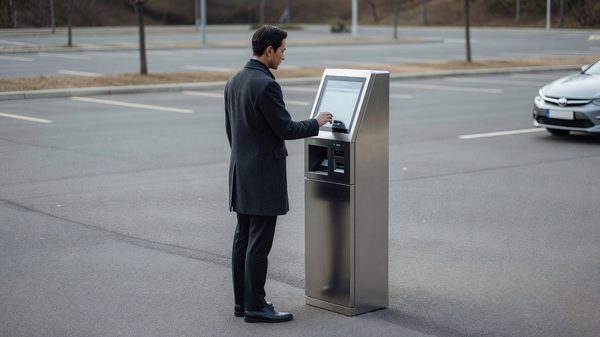
Parking chargebacks sit in an awkward corner of the payments world. The industry has distinctive dispute patterns — the transaction amounts are small, the customer relationship is brief and transactional, and the chargeback reasons cluster into a handful of predictable categories. Yet many operators treat chargebacks as retail disputes and get consistently low win rates as a result.
A small amount of process rigor can meaningfully improve chargeback outcomes. This article covers what’s different about parking chargebacks, the documentation that actually wins disputes, and the prevention patterns that reduce volume at the source.
What Makes Parking Chargebacks Different
Small transaction amounts. Most parking transactions fall between $5 and $40. Many processors have minimum dispute thresholds below which they simply refund without chargeback paperwork. This reduces disputed volume visibility but also reduces the operator’s ability to contest patterns.
No physical goods or ongoing service relationship. Standard retail chargeback defenses — “customer received and used the product for weeks before disputing” — don’t apply. The service delivery window is typically 1-24 hours.
Transaction happens at an unattended terminal. No signature, no store employee observing the customer, no loyalty account history to reference. Defense relies heavily on terminal-generated evidence.
High rate of “didn’t recognize the merchant name” disputes. Parking merchant descriptors often look obscure on credit card statements — “CITY LOT #47” or “PARKING OPS LLC 09” — and customers genuinely don’t recognize them when reconciling statements. This category is usually winnable with good evidence but is never going to go to zero.
The Five Dispute Categories That Dominate Volume
1. Unrecognized merchant. Customer doesn’t remember the transaction and disputes it. Typically reason code “unrecognized” or “not as described” depending on scheme.
2. Duplicate transaction. Customer claims the transaction was charged twice. Usually a single authorization + capture appearing as two entries in the customer’s bank view, not an actual duplicate. Customer-side interpretation issue.
3. Services not rendered. Customer claims they paid but the gate didn’t open, or the session terminated early. This category is where evidence quality matters most.
4. Fraud (card not present or counterfeit). Customer’s card was genuinely compromised and used at the facility. The operator is usually not liable for these but still has to respond.
5. Refund not processed. Customer was promised a refund but it didn’t arrive. Process documentation is key to resolution.
Evidence That Wins Disputes
For disputes involving actual service delivery questions, the evidence that matters:
Pay station transaction log — timestamp, amount, card last-4, authorization code, AVS response. Standard and essential but not sufficient alone.
Gate/access log — timestamped record that a vehicle entered or exited, ideally correlated to the payment session via license plate or session token.
License plate photo — if LPR is deployed, photo of the vehicle at entry and exit with timestamps. This is the most persuasive single piece of evidence available and wins a high proportion of disputes when available.
Receipt print log — did the customer receive a printed receipt? If yes, the transaction was presented to them at time of service.
CCTV footage — for premium facilities, time-correlated video of the vehicle at entry/exit. Most chargeback responses don’t need this, but for larger dispute amounts it’s decisive.
Operators who can routinely produce a dispute response package including transaction log, gate log, and LPR photo win roughly 70-80% of “services not rendered” chargebacks. Operators producing only transaction logs win roughly 30-40%.
Prevention That Actually Works
Clear merchant descriptor. If your current descriptor is “CITY CAPITAL PARKING SVCS” (truncated strangely on bank statements), customers won’t recognize it. A cleaner descriptor like “CITY PARK LOT 5” with the facility name visible reduces unrecognized-merchant chargebacks 20-40%.
Email or text receipt. When the customer provides a phone number or email at the pay station (mobile pay apps do this automatically), sending a transaction confirmation prevents unrecognized-merchant disputes months later. Adoption here is uneven; operators with mature loyalty programs see dramatic chargeback reductions.
Printed receipt with clear facility identification. Even customers who don’t take the receipt benefit from the fact that they were offered one. Receipts with the facility name, address, and a phone number to call for billing questions reduce disputes before they become chargebacks.
Proactive refund on verifiable service failures. If the gate didn’t open because the loop detector was failing, refunding the customer at first complaint costs less than the chargeback process. Operators with good service-failure detection can proactively refund before the customer even disputes.
Response Timing
Chargeback response windows are typically 20-30 days depending on scheme. Missed deadlines are automatic losses. Operators handling disputes in-house need a named owner, a monitoring process, and escalation if the owner is unavailable.
Most small operators do better outsourcing to their acquirer’s dispute response service or to specialty chargeback management firms. The fixed fee (often $15-30 per response) is usually less than the loaded cost of an employee assembling evidence packages manually.
Frequently Asked Questions
What’s a reasonable chargeback rate for parking?
Well-managed operators run 0.3-0.6% of transactions. Rates above 1% trigger processor attention and potentially program warnings. Rates above 2% can result in program termination. Monitoring monthly trend is more useful than absolute rate.
Are chargebacks covered by EMV liability shift?
For in-person contactless and chip transactions on EMV-compliant terminals, yes — the fraud liability shifts to the card issuer. For magstripe fallback or non-EMV terminals, the operator remains liable. Most modern parking pay stations are EMV-compliant, but fallback behavior varies.
Should we contest every chargeback?
No. For transactions under $20, the operational cost of responding often exceeds the recovered amount. Many operators set a threshold ($15-25) below which they accept the chargeback automatically. The win rate data on high-volume, low-amount disputes supports this approach.
How do we handle friendly fraud (customer disputes a transaction they remember making)?
Evidence-based response. LPR photos and entry/exit logs make this nearly impossible to dispute successfully. Operators without LPR see higher rates of friendly fraud and less recoverable dispute volume. This is one of the stronger ROI arguments for LPR deployment beyond its operational benefits.