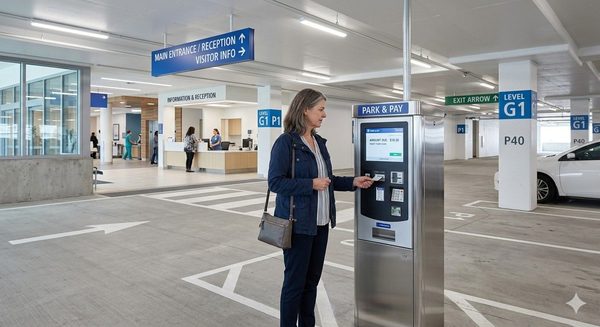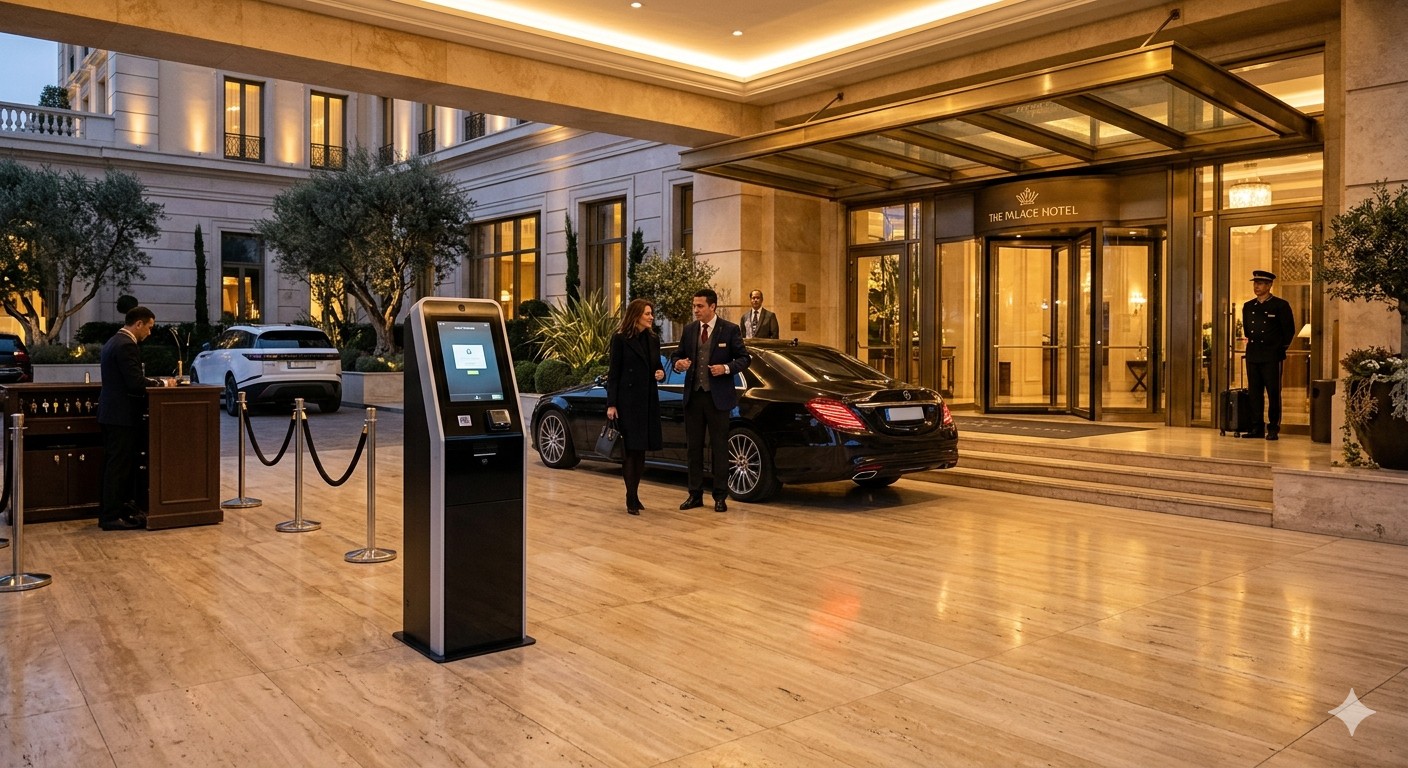
Parking is often the first and last physical interaction a guest has with a hotel property. A confusing payment kiosk in the garage, an unexpectedly high charge at checkout, or a slow valet retrieval process can sour an otherwise excellent stay. Conversely, a seamless parking experience, where the guest barely thinks about payment, reinforces the perception of quality that hotels work so hard to build.
For hotel operators, parking is also a significant revenue line. Urban hotels can generate $50 to $100 or more per occupied room per night from parking fees. Resort properties with large self-park lots may charge less per vehicle but serve higher volumes. In either case, the payment system you choose affects both the guest experience and your ability to capture that revenue efficiently.
This guide covers the specific requirements of hotel parking payment systems, from guest validation workflows to valet integration, and examines how different system architectures serve different property types.
How Hotel Parking Differs from Commercial Parking
Hotel parking operations share infrastructure with commercial garages but have fundamentally different customer dynamics.
Length of Stay
Commercial garage parkers stay hours. Hotel guests stay days. A payment system designed for short-term turnover (calculate fee, pay, exit) needs adaptation for multi-day stays where the charge accrues over time and is often settled at front desk checkout rather than at a pay station.
Payment Integration with PMS
Hotels run Property Management Systems (PMS) such as Opera, Maestro, Mews, or Cloudbeds. Parking charges typically need to post to the guest’s room folio so they can be settled at checkout along with room charges, minibar, and other incidentals. This PMS integration is a requirement that commercial parking systems do not have.
Validation Complexity
Hotels validate parking for multiple guest categories, each with different rules.
| Guest Type | Typical Validation | Payment Responsibility |
|---|---|---|
| Registered overnight guest | Full validation (complimentary or discounted) | Charged to room folio |
| Restaurant/bar patron | Partial validation (2-4 hours free) | Guest pays remainder at pay station |
| Event/banquet attendee | Full or partial validation by event organizer | Billed to event master account |
| Spa/amenity visitor | Partial validation | Guest pays remainder |
| Day visitor (no validation) | None | Guest pays full rate at pay station |
Managing these overlapping validation programs manually is error-prone. Automated validation through the parking system is essential at scale.
Valet Operations
Many hotels offer valet parking, which introduces vehicle tracking, key management, tip handling, and retrieval timing into the payment equation. The parking payment system must support the valet workflow or integrate cleanly with a separate valet management platform.
System Architecture Options for Hotels
Hotel parking systems generally fall into three architecture categories, each with trade-offs.
Fully Integrated (Parking System + PMS)
The parking access and revenue control system communicates directly with the hotel PMS. When a registered guest enters the garage (identified by room key, LPR, or reservation code), the system automatically validates their parking and posts the charge to their folio.
Advantages: Seamless guest experience, automated validation, accurate folio charges, reduced front desk workload.
Challenges: Requires PMS integration capability from the parking vendor, ongoing maintenance of the integration, and coordination between the hotel IT team and parking system provider.
Equipment manufacturers like Skidata, Scheidt & Bachmann, Flowbird, Hectronic, and T2 Systems offer various levels of PMS integration. The depth of integration varies: some support real-time, bidirectional communication, while others rely on batch file exchanges. Request integration documentation and a reference property using your specific PMS before committing to any vendor.
Standalone Parking System with Manual Validation
The parking system operates independently, and validation is handled through physical validation stamps, coded tickets, or front desk override codes. Charges are tracked in the parking system and reconciled against PMS records manually or through a daily report.
Advantages: Simpler to deploy, no integration dependency, works with any PMS.
Challenges: More labor-intensive, higher risk of validation fraud, reconciliation burden, and a less polished guest experience.
Valet-Only with Software Platform
Some hotels, particularly boutique and luxury properties, skip self-park payment infrastructure entirely and run everything through a valet operation managed by software such as Ocra Valet, LAZ Parking’s valet tools, or custom solutions. The guest interacts only with the valet attendant, and parking charges are posted to the folio by front desk staff.
Advantages: High-touch guest experience, no self-park equipment to maintain.
Challenges: Higher labor cost, limited scalability for high-volume properties, and difficulty offering discounted self-park as an alternative.
Guest Experience Design
The guest’s parking payment experience should be designed as carefully as the check-in experience. Here are the principles that matter most.
Minimize Surprises
Publish parking rates clearly during the booking process, on your website, and on signage at the garage entrance. When a guest discovers an unexpected $65 daily parking charge at checkout, it creates resentment regardless of whether the rate is competitive. Transparency eliminates this friction.
Offer Multiple Payment Paths
Different guests have different preferences.
- Post to room folio for overnight guests who want a single checkout settlement.
- Pay at station for day visitors and restaurant patrons who are not staying overnight.
- Mobile payment for guests who prefer not to visit a pay station at all.
- Valet settlement for properties offering valet as the primary service.
The more paths you offer, the more likely each guest finds one that feels natural. For considerations on automated versus attended payment approaches, the choice depends heavily on your property’s service positioning.
Make Validation Effortless
The guest should not have to think about validation. For overnight guests, parking validation should happen automatically upon check-in, whether through PMS integration, a front desk code, or LPR enrollment at check-in. For restaurant patrons, the server or host should handle validation at the point of dining, not send the guest to the front desk with a ticket.
Streamline the Exit
The exit experience matters disproportionately because it is the last impression. A validated guest should be able to exit without stopping, or with a single ticket scan that takes under five seconds. Any exit process that requires the guest to re-enter a code, swipe a card, or interact with a complex pay station undoes the goodwill built during their stay.
For practical approaches to faster exits, see our guide on reducing payment friction in parking operations.
Revenue Optimization Strategies
Hotel parking is not just a cost center. With the right system and strategy, it becomes a meaningful revenue contributor.
Dynamic Pricing
Charge different rates based on demand. Event nights, weekends in urban markets, and holiday periods at resort properties can command premium parking rates. Dynamic pricing requires a payment system that supports scheduled rate changes and, ideally, integration with your revenue management strategy.
Tiered Parking Products
Offer multiple parking products at different price points.
| Product | Price Point | Target Guest |
|---|---|---|
| Standard self-park | Base rate | Budget-conscious guests |
| Premium/covered self-park | 20-40% premium | Guests with luxury vehicles |
| Valet parking | 50-100% premium | Convenience-focused guests |
| EV charging + parking | Premium + charging fee | Electric vehicle owners |
| Monthly/extended stay | Discounted daily rate | Long-term guests, local members |
Event and Group Parking
Banquets, conferences, and weddings generate concentrated parking demand. A system that supports event-specific rates and group validation codes lets you capture this revenue cleanly while providing a professional experience for event organizers and their attendees.
Third-Party Revenue
If your garage has excess capacity during certain hours (daytime at a leisure hotel, evenings at a business hotel), consider selling that inventory to the public through platforms like SpotHero, ParkWhiz, or your own website. This requires a payment system that can distinguish between hotel guests and transient public parkers.
Loyalty Program Integration
Complimentary or discounted parking for loyalty program members is a common hotel amenity. Your parking system should be able to identify loyalty members (through PMS integration, mobile app, or LPR) and apply the correct validation automatically, without requiring the member to present a card or code.
Technology Considerations
LPR for Guest Recognition
License plate recognition is increasingly popular in hotel parking because it enables frictionless entry and exit for registered guests. When a guest provides their plate number during reservation or check-in, the LPR system recognizes them at entry, validates automatically, and opens the gate at exit without any physical interaction.
The guest experience improvement is significant: no tickets, no validation stamps, no stopping at pay stations. Industry groups like the International Parking & Mobility Institute have highlighted LPR as a transformative technology for hospitality parking.
EV Charging Integration
Electric vehicle charging in hotel garages is moving from amenity to expectation. Your parking payment system should be able to integrate with EV charging stations (ChargePoint, Blink, Tesla Destination, etc.) so that charging fees can be combined with parking fees on the guest’s folio.
Mobile Key and Parking Convergence
Some hotel brands are exploring convergence between mobile room keys and parking access. The guest’s phone serves as both their room key and their parking credential, eliminating physical cards and tickets entirely. This requires deep integration between the PMS, the mobile key platform, and the parking access system.
Operational Best Practices
Staff Training
Front desk and valet staff must understand the parking payment system well enough to resolve common guest issues: lost tickets, failed validations, incorrect charges. A frustrated guest who is told to call a parking system vendor’s support line is not going to leave a positive review.
Revenue Reconciliation
Hotel parking revenue flows through multiple channels (PMS folio charges, pay station transactions, valet cash tips, third-party platform settlements) and must be reconciled daily. Clear ownership of parking revenue reconciliation prevents leakage. Parking Professional regularly covers best practices in parking revenue management for hospitality properties.
Maintenance Scheduling
Pay stations and gate equipment need regular maintenance, but hotels have the added constraint of guest-facing aesthetics. A malfunctioning pay station with an “Out of Order” sign does not match the standards of a property charging $300 per night. Schedule preventive maintenance during low-traffic hours and maintain a rapid-response agreement with your equipment provider.
Security
Hotel garages attract vehicle break-ins and other crimes. While this is not directly a payment system issue, the payment system’s data (entry/exit times, LPR images, transaction records) can support security investigations. Ensure your system retains this data in compliance with local regulations and your property’s security protocols.
Common Mistakes in Hotel Parking Payment
- Treating parking as an afterthought in the guest journey. Parking is a touchpoint that affects satisfaction scores and reviews. Design it intentionally.
- Manual validation processes that are slow and error-prone. If front desk staff are hand-stamping tickets, you are losing money to unreimbursed validations and wasting staff time.
- No PMS integration. Posting parking charges manually to guest folios creates billing errors and checkout delays.
- Ignoring transient revenue. A hotel that only focuses on guest parking and ignores the revenue potential of public transient parking during off-peak hours is leaving money on the table.
- Insufficient exit lane capacity. Hotels with large event spaces need exit capacity to handle 200+ vehicles departing within 30 minutes after an event. One exit lane with a pay station is not enough.
Key Takeaways
- Hotel parking payment systems must integrate with the PMS to post charges to guest folios, automate validation, and streamline checkout.
- Guest experience starts in the garage. The payment system should be invisible to the guest whenever possible, handled automatically through validation, LPR, or mobile integration.
- Multiple validation programs (overnight, restaurant, event, spa) require a system that supports rule-based automation, not manual processes.
- Parking is a revenue opportunity, not just a cost center. Dynamic pricing, tiered products, and third-party sales can significantly increase ancillary revenue.
- LPR and mobile convergence are the direction the industry is heading. Properties investing in these technologies now will have a competitive advantage in guest experience.
- Staff training and revenue reconciliation are just as important as the technology. The best system underperforms without operational discipline behind it.
The hotels that get parking right treat it as an extension of their hospitality brand. The payment experience should be as smooth and considered as every other guest interaction on the property.
For operators managing airport-adjacent hotel parking or properties that handle airport overflow demand during peak travel periods, Airport Parking Payment Systems: Managing High-Volume Transaction Periods covers the throughput architecture, LPR-based exit, and redundancy planning relevant to high-volume environments.